Patient Balances Are Often Hard to Track
Patient balances may come from copays, deductibles, coinsurance, self-pay charges, insurance transfers, denied claims, unpaid balances, or previous statements.
EMR-EHRs Patient Billing and Family Billing Software helps medical practices manage patient responsibility, patient balances, family accounts, guarantor billing, statements, payments, payment plans, collections follow-up, patient A/R aging, and billing reports where supported.
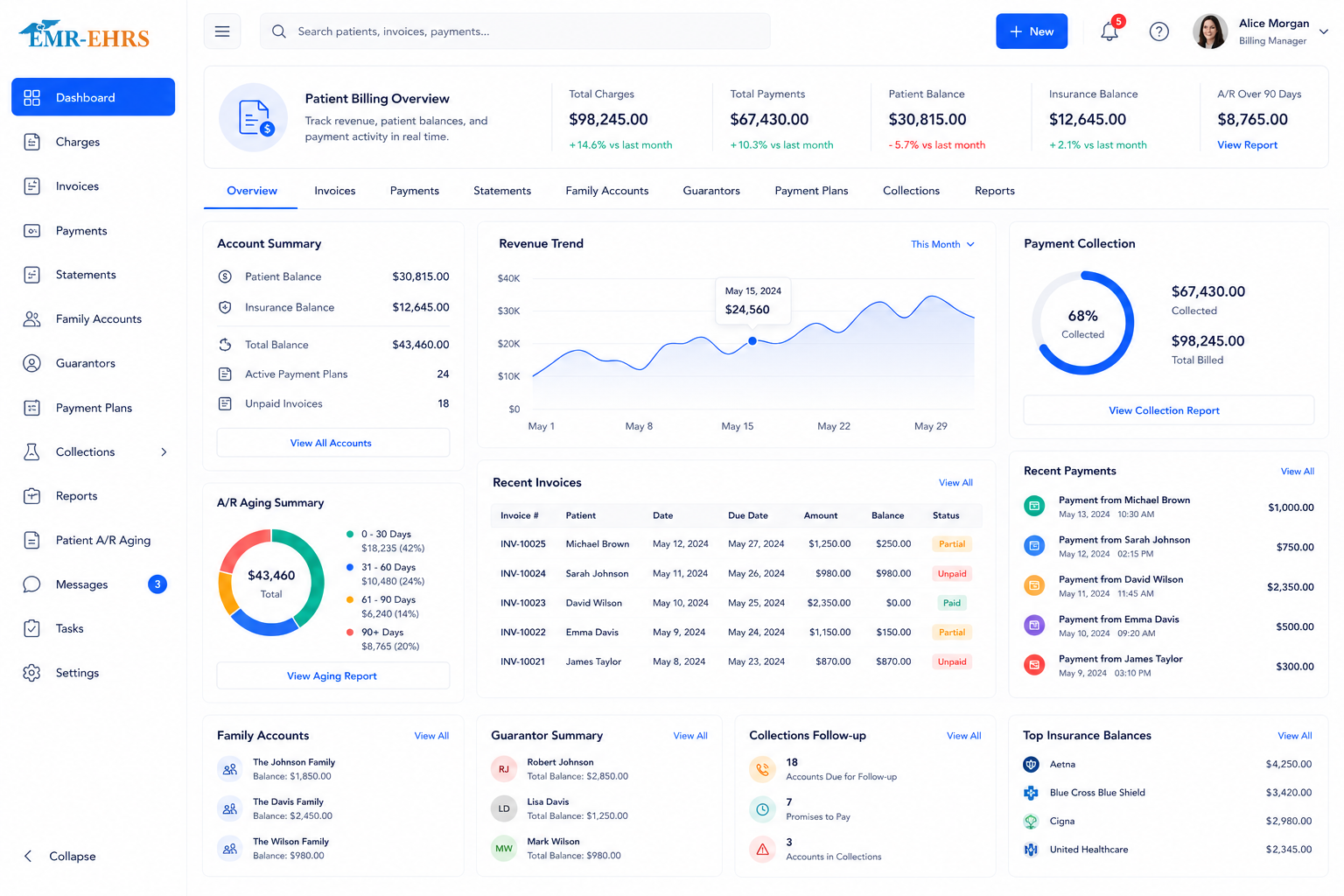
Patient billing software helps medical practices manage the patient financial responsibility portion of healthcare billing, including patient balances, guarantor accounts, family billing, patient statements, payment posting, online payments, payment plans, collections follow-up, patient A/R aging, and billing reports where supported.
EMR-EHRs Patient Billing and Family Billing Software helps practices manage patient balances, family accounts, guarantor responsibility, patient statements, payments, collections, and reporting in a structured billing workflow where supported.
This page focuses on patient-side billing after responsibility is identified, including family billing, guarantor accounts, statements, payments, payment plans, and patient A/R.
| Billing Area | Main Focus | Example | EMR-EHRs Workflow |
|---|---|---|---|
| Insurance billing | Payer responsibility | Claims, EOB, ERA, payer payments | Connects payer payment outcomes to patient balances where supported |
| Patient billing | Patient responsibility | Copay, deductible, coinsurance, self-pay balance | Tracks patient balances, statements, payments, and collections where supported |
| Family billing | Multiple patient balances under one responsible party | Parent pays for children, family account, household billing | Supports family billing workflow where supported |
| Guarantor billing | Financially responsible person or account | Parent, spouse, legal responsible party | Tracks balances by guarantor where supported |
| Collections | Follow-up on unpaid patient balances | Reminders, payment plans, aging review | Supports follow-up and reporting where supported |
Patient balances may come from copays, deductibles, coinsurance, self-pay charges, insurance transfers, denied claims, unpaid balances, or previous statements.
One guarantor may be responsible for multiple patients, children, spouses, or family accounts. Without family billing, balances and statements can be difficult to manage.
Practices need a structured way to identify the responsible party, guarantor account, linked patients, and financial responsibility.
Patients may have questions about charges, insurance adjustments, prior payments, remaining balances, due dates, and statement history.
Manual statement creation, printing, batching, reviewing, resending, and follow-up can slow billing teams.
Patient payments, family payments, partial payments, card payments, cash/check payments, portal payments, and adjustments must update balances correctly where supported.
When a guarantor pays for multiple family members or multiple dates of service, payment allocation can become difficult without a structured workflow.
Practices may need to track installment balances, due dates, missed payments, payment plan status, payment agreement notes, and plan completion.
Without follow-up notes, reminders, account statuses, staff tasks, and aging reports, unpaid patient balances may age too long.
Patient balances can accumulate when statements, payment plans, collections follow-up, and front desk balance review are not connected.
Front desk teams may need to view copays, outstanding balances, family balances, guarantor balances, payment due today, and account notes during check-in or check-out where supported.
Patients may need access to statements, current balances, payment history, receipts, payment plans, and secure online payments where supported.
Practice leaders need visibility into patient A/R, aging buckets, unpaid balances, collections performance, payment plan activity, statement activity, and payment posting.
AI-assisted summaries may help review patient balances, family balances, aging, payment plans, and collections follow-up where available, but final billing and account decisions must remain with practice staff.
Patient responsibility may include copays, deductibles, coinsurance, self-pay balances, transferred insurance balances, unpaid charges, or remaining patient responsibility where supported.
The practice reviews the financially responsible party, guarantor account, family account, linked patients, relationship details, and balance responsibility where supported.
Patient balances are updated based on charges, insurance payments, adjustments, transfers, patient payments, partial payments, write-offs, and remaining responsibility where supported.
The practice reviews combined family balances, individual patient balances under a guarantor, account notes, statement history, and payment allocation where supported.
The practice creates patient statements, balance notices, current statements, past-due statements, or account statements where supported.
The practice creates family statements, guarantor statements, or combined statements showing balances for linked patient accounts where supported.
Staff review dates of service, charges, insurance payments, patient payments, adjustments, remaining balances, guarantor details, statement history, and past-due status where supported.
Statements may be printed, mailed, emailed, posted to a portal, or delivered electronically where supported.
Payments may be collected by cash, check, card, online payment, portal payment, payment link, HSA/FSA, or other supported payment methods.
Payments, partial payments, family payments, payment source, payment date, receipts, adjustments, reversals, and remaining balances are recorded where supported.
Payments can be allocated to selected balances, dates of service, family members, guarantor balances, statements, or payment plans where supported.
Payment plans can track installment amounts, due dates, remaining balance, missed payments, payment agreement notes, plan status, and completion where supported.
Unpaid balances, aging status, statement follow-up, collections notes, payment promise notes, reminders, staff tasks, and next actions are reviewed where supported.
Billing managers review aging buckets, outstanding balances, family aging, guarantor aging, patient A/R, payment plan activity, statement history, and collections reports where supported.
AI-assisted tools may summarize patient balances, family balances, guarantor balances, aging, payment plans, unpaid balances, collections notes, and next follow-up needs where available.
Confirm supported payment types, links, portal workflows, gateways and processor requirements during evaluation.
Confirm supported portal billing, statement notification, receipt and patient self-service workflows during evaluation.
HIPAA-focused billing workflow, designed to support secure billing access, privacy-focused patient statement workflow, and audit-friendly billing activity where supported.
AI-assisted billing tools should support balance review, summaries, and follow-up visibility while EMR-EHRs users, billers, managers, and administrators remain responsible for final billing, payment, collections, account, and compliance decisions.
Need patient balances, family balances, guarantor accounts, statements, payment posting, payment plans, aging, collections follow-up, and reporting where supported.
Need copay visibility, balance alerts, patient balance review, family balance review, guarantor balance review, payment collection, and receipt access where supported.
Need patient A/R, aging reports, collections reports, payment activity, statement activity, unpaid balance visibility, and billing workflow visibility where supported.
Need billing permissions, user access, statement controls, payment controls, audit-friendly notes, account notes, and secure workflow visibility where supported.
Need patient balances by provider, location, payer, guarantor, family account, date of service, and encounter where supported.
Need family billing, parent/child responsibility, guarantor billing, combined statements, family payment tracking, and guarantor account history where supported.
| Billing Area | Manual Billing Workflow | EMR-EHRs Patient Billing Software |
|---|---|---|
| Patient balances | Spreadsheet or manual review | Patient balance tracking where supported |
| Family billing | Hard to combine accurately | Guarantor/family billing where supported |
| Guarantor accounts | Manual relationship tracking | Responsible party workflow where supported |
| Statements | Manual creation and mailing | Statement generation where supported |
| Payments | Manual posting | Patient payment posting where supported |
| Partial payments | Hard to allocate | Payment allocation where supported |
| Payment plans | Separate notes | Payment plan tracking where supported |
| Collections | Inconsistent follow-up | Collections workflow where supported |
| Aging | Manual reports | Patient A/R aging reports where supported |
| Front desk visibility | Limited | Balance visibility where supported |
| Reporting | Manual summaries | Billing reports where supported |
| AI summaries | Not available | AI-assisted summaries where available |
This conceptual workflow preview shows how statements, guarantor and family balances, payments, aging and follow-up activity can be organized for billing teams.
Current status, history and family balances.
Posting, partial payments and allocation.
Past-due balances and patient A/R.
AI balance summary where available.
Assess patient billing software by statement clarity, payment posting controls, family-account handling, aging visibility, staff workflow and integration requirements.
EMR-EHRs helps practices track patient balances, patient responsibility, payments, unpaid balances, account notes, and statement status where supported.
EMR-EHRs supports family account billing, guarantor responsibility, linked patient balances, responsible party tracking, and family payment tracking where available.
EMR-EHRs helps practices generate, review, send, resend, and track patient statements, family statements, and guarantor statements where supported.
EMR-EHRs supports patient payment posting, partial payments, adjustments, payment allocation, payment plans, payment history, and remaining balance review where available.
EMR-EHRs helps billing teams track past-due balances, follow-up notes, collections status, payment plans, account notes, next actions, and staff tasks where supported.
EMR-EHRs supports patient A/R reports, aging reports, unpaid balance reports, statement reports, payment reports, collections reports, and family aging reports where available.
EMR-EHRs helps front desk teams review copays, balances, family balances, guarantor balances, payment status, account notes, and receipts where supported.
EMR-EHRs can support patient statement access, balance review, online payment, payment history, receipt access, and payment plan visibility where available.
EMR-EHRs supports secure billing access, role-based access where supported, statement controls, account notes, and audit-friendly billing activity where supported.
EMR-EHRs can support patient balance summaries, family balance summaries, guarantor balance summaries, aging summaries, payment plan summaries, and collections summaries where available.
Review patient responsibility, copays, deductibles, coinsurance, self-pay balances, insurance transfers, unpaid balances, and remaining balance where supported.
Review guarantor details, linked patients, family balances, responsible party, account notes, statement history, and relationship details where supported.
Generate patient statements, family statements, guarantor statements, statement batches, print statements, electronic statements, or portal statements where supported.
Collect and post patient payments, partial payments, family payments, adjustments, receipts, payment sources, and remaining balances where supported.
Create and track payment plans, installment balances, due dates, missed payments, plan status, agreement notes, and payment plan follow-up where supported.
Review past-due balances, aging buckets, statement follow-up, patient notes, guarantor notes, family notes, payment promises, staff tasks, and collections status where supported.
Review patient A/R, aging reports, unpaid balances, payment reports, statement activity, collections reports, family balances, guarantor balances, and workflow improvement opportunities.
Patient billing software helps medical practices manage patient responsibility, patient balances, statements, payments, payment plans, collections follow-up, patient A/R, guarantor accounts, family billing, and billing reports. EMR-EHRs Patient Billing and Family Billing Software helps practices organize patient-side billing workflows where supported.
EMR-EHRs can support responsible party tracking, guarantor accounts, linked family balances, parent/child billing relationships where supported, combined family statements where supported, family payment allocation, family payment history, guarantor account notes, and family account aging where supported.
Yes. EMR-EHRs can support patient statement generation, family statements, guarantor statements, statement history, payment posting, partial payments, payment allocation, receipts, payment history, remaining balance tracking, and statement status where supported.
EMR-EHRs can support payment plan setup, installment balances, due dates, missed payment tracking, payment plan status, collections notes, past-due balances, aging buckets, follow-up tasks, next action tracking, and collections reports where supported.
Medical practices should look for patient balance management, guarantor billing, family billing, statement generation, online payments where supported, payment posting, payment plans, collections follow-up, patient A/R, aging reports, front desk balance visibility, patient portal billing where supported, privacy-focused access, and reporting.
Manage patient balances, guarantor accounts, family billing, patient statements, payments, payment plans, collections follow-up, patient A/R aging, and billing reports with EMR-EHRs Patient Billing and Family Billing Software where supported.
Phone: (480) 782-1116 | Email: jason@1stproviderschoice.com