Complex Neurological Exam Documentation
Neurologists need structured fields for cranial nerves, motor function, reflexes, sensation, gait, balance, coordination, cognition, and detailed neurological impressions.
EMR-EHRs Neurology EHR Software helps neurology practices manage exams, condition-specific documentation, EEG and EMG results, imaging, medications, referrals, authorizations, billing, scheduling, and long-term care in one connected system.
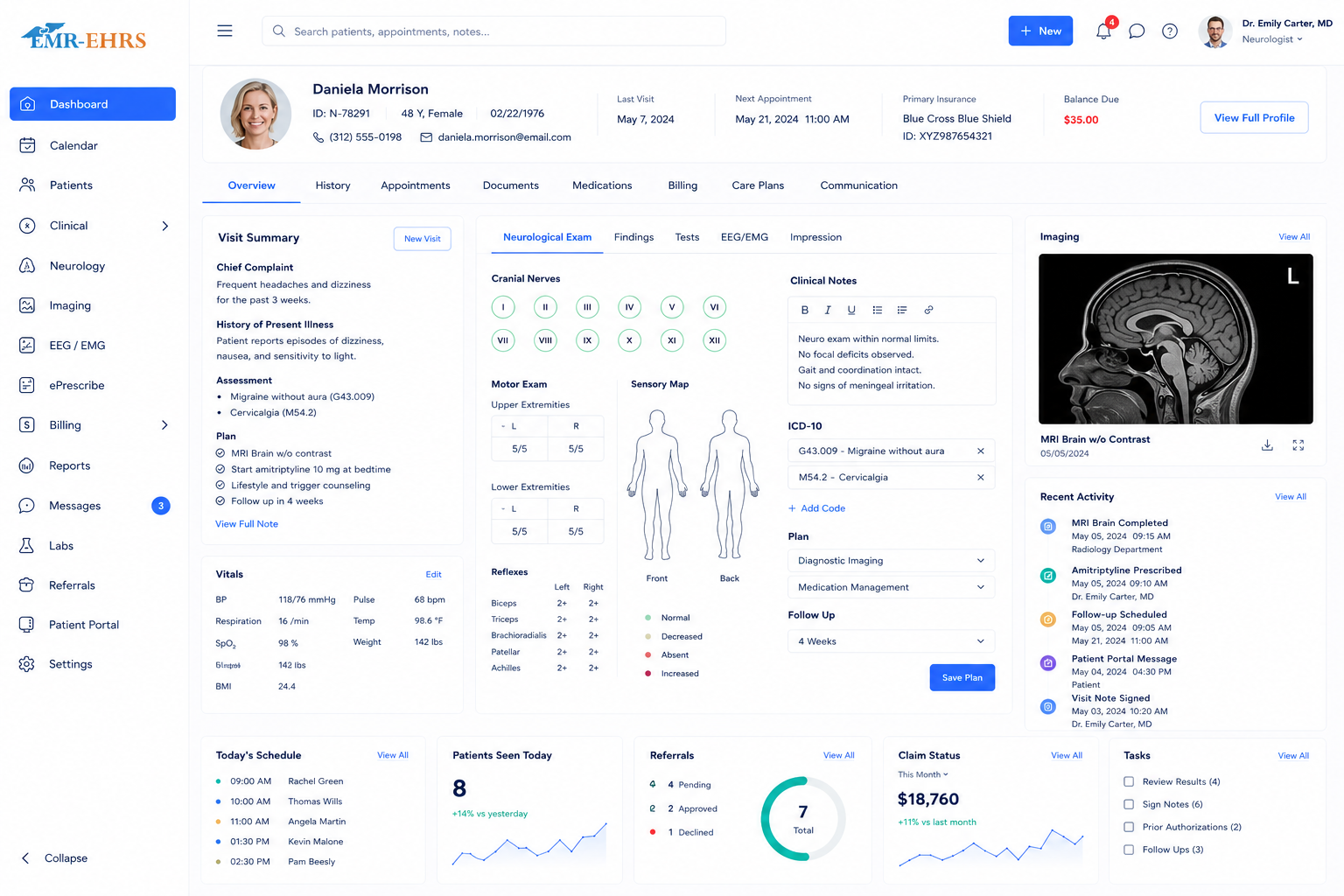
Neurology EHR software is a specialty electronic health record system that helps neurologists manage patient charts, neurological exams, condition-specific templates, EEG/EMG/NCS results, imaging reports, medication history, treatment plans, referrals, prior authorizations, e-prescribing, billing, scheduling, patient communication, reporting, and long-term neurological follow-up.
EMR-EHRs neurology EHR software is designed to support the complete neurology workflow: referral, intake, neurological history, neurological examination, diagnostic testing, diagnosis, medication management, treatment planning, long-term follow-up, billing, reporting, and patient engagement.
Neurology practices manage complex clinical histories, neurological exams, diagnostic results, medication changes, chronic conditions, referrals, prior authorizations, and long-term follow-up. Generic EHR systems often do not provide enough structure for neurological documentation, diagnostic workflows, disease progression tracking, and specialty billing.
Neurologists need structured fields for cranial nerves, motor function, reflexes, sensation, gait, balance, coordination, cognition, and detailed neurological impressions.
Track seizures, migraines, tremors, cognitive changes, medication response, symptom progression, relapses, and follow-up history over time.
Organize EEG, EMG/NCS, MRI, CT, lab results, imaging reports, and outside referral records that may otherwise live across disconnected systems.
Support medication adjustments, refill management, controlled-substance workflow where available, side-effect tracking, allergy review, and e-prescribing support.
Track imaging, medications, diagnostic procedures, therapies, referrals, documentation, and payer approval status.
Connect consultations, follow-ups, diagnostic testing, procedures, medication management, and documentation requirements with billing workflows.
Support follow-up reminders and care coordination for epilepsy, migraine, Parkinson's disease, MS, dementia, neuropathy, stroke history, and movement disorders.
Improve visibility into visits, referrals, diagnostic orders, pending results, claims, denials, revenue, no-shows, productivity, and outcomes.
Capture referral source, reason for visit, demographics, insurance, prior records, medication list, previous imaging, outside notes, and authorization requirements.
Document chief complaint, symptom onset, duration, triggers, family history, past neurological history, medications, allergies, comorbidities, and prior treatment response.
Record cranial nerves, motor strength, reflexes, sensory findings, gait, coordination, balance, mental status, cognitive screening, speech/language findings, and impressions.
Order or document EEG, EMG/NCS, MRI, CT, labs, neuropsychological testing, vascular studies, sleep testing, or other diagnostic services.
Track diagnostic status, EEG/EMG interpretations, imaging reports, lab findings, outside records, provider review tasks, and patient follow-up needs.
Document diagnosis, differential diagnosis, medication plan, procedure recommendations, therapy referrals, education, and follow-up timeline.
Manage prescriptions, refills, medication history, dosage changes, side effects, patient response, prior authorizations, and pharmacy communication.
Track disease progression, symptom trends, medication response, repeat testing, treatment updates, patient communication, and care plan changes.
Connect documentation, coding, prior authorizations, claim readiness, unpaid claims, denial tracking, and revenue reporting.
Review clinical, operational, and financial reports for practice performance and patient care visibility.
EMR-EHRs helps neurology practices organize diagnostic orders, results, interpretations, follow-up tasks, and documentation history.
Neurology care often continues for months or years. EMR-EHRs helps practices organize long-term clinical information so providers can review symptom trends, diagnostic history, medications, treatment response, and follow-up needs before each visit.
Neurology patients often require ongoing medication adjustments for epilepsy, migraine, Parkinson's disease, multiple sclerosis, neuropathy, dementia, and other neurological conditions. EMR-EHRs helps organize medication history, refills, dosage changes, patient response, side effects, and e-prescribing in one connected workflow.
EMR-EHRs helps neurology practices keep referral status, authorization details, imaging approvals, medication approvals, therapy referrals, and payer documentation visible across clinical, scheduling, and billing workflows.
EMR-EHRs connects clinical, administrative, and financial workflows so neurology practices can manage patient care, diagnostic coordination, billing, and reporting without relying on disconnected systems.
Only specific integration partners, device names, or lab connections should be listed when they are verified. This page uses careful workflow wording for connected documentation and exchange needs.
AI should support documentation and administrative efficiency while keeping neurologists responsible for final review, diagnosis, treatment decisions, and signed records.
Draft and organize visit note content for provider review.
Summarize structured exam findings without replacing clinical judgment.
Help surface diagnostic result context and follow-up tasks.
Flag incomplete fields, pending signatures, or claim-readiness gaps.
Highlight missing authorization documentation or expiring approval details.
Suggest follow-up reminders, pending result review, and communication tasks.
Manage neurological exams, diagnostics, medication plans, follow-ups, billing, and reporting.
Support documentation, scheduling, e-prescribing, referrals, patient communication, and claims workflow.
Centralize records, provider schedules, diagnostic workflows, billing, reports, and patient follow-up.
Track seizure history, EEG results, medication response, safety counseling, and follow-up care.
Manage headache frequency, triggers, medications, treatment response, disability impact, and long-term monitoring.
Track tremor, gait, rigidity, medication timing, functional status, progression, and follow-up needs.
Support cognitive assessments, caregiver input, behavioral symptoms, safety concerns, medication review, and care planning.
Track weakness, sensory changes, EMG/NCS results, neuropathy symptoms, medication plans, and care coordination.
Support imaging review, risk factor documentation, medication plans, referrals, secondary prevention, and follow-up care.
| Workflow Area | Generic EHR | Neurology EHR |
|---|---|---|
| Neurological exam | General exam fields | Cranial nerves, motor, sensory, reflexes, gait, coordination, balance, cognition |
| Condition templates | Generic visit notes | Epilepsy, migraine, stroke, Parkinson's, MS, dementia, neuropathy templates |
| Diagnostic workflow | Manual attachments or basic result review | EEG, EMG/NCS, MRI, CT, labs, imaging, and outside record workflows |
| Long-term tracking | Limited trend visibility | Seizures, headaches, tremor, cognition, medication response, disease progression |
| Medication management | General prescription workflow | Dose changes, side effects, response, adherence, refills, complex medication history |
| Referrals and authorizations | Often manual | Imaging, medication, therapy, and procedure authorization tracking |
| Billing | General claim workflow | Neurology visits, diagnostics, procedures, payer rules, denials, unpaid claims |
| Patient engagement | General portal | Symptom forms, medication updates, seizure/headache logs, follow-up communication |
| Reporting | Basic reports | Clinical trends, diagnostic status, referrals, claims, denials, productivity |
Use this checklist when comparing neurology EHR vendors.
EMR-EHRs supports neurological exams, condition-specific templates, diagnostic workflows, e-prescribing, referrals, billing, patient follow-ups, and reporting.
EMR-EHRs helps connect clinical, administrative, and billing workflows so neurology teams can reduce duplicate work and improve visibility.
Track EEG, EMG/NCS, imaging reports, lab results, medication changes, follow-up tasks, and documentation gaps from one workflow.
EMR-EHRs helps teams monitor prior authorization status, claim readiness, unpaid claims, denials, and billing reports.
Support intake forms, appointment reminders, symptom updates, medication communication, test result access, and follow-up instructions.
EMR-EHRs helps neurology practices configure templates, schedules, users, billing workflows, reports, and staff workflows. Phone: (480) 782-1116. Email: jason@1stproviderschoice.com.
Review clinical workflow, documentation needs, diagnostic workflows, medication management, billing, referrals, authorizations, and reporting goals.
Set up users, roles, templates, schedules, reports, authorizations, billing settings, and patient portal workflows.
Configure neurological exam templates, condition-specific templates, diagnostic result workflows, medication workflows, and follow-up tracking.
Train neurologists, clinical staff, front desk, billing staff, and administrators.
Support your team during launch.
Improve templates, reports, workflows, and team adoption after launch.













See how EMR-EHRs can help your neurology practice manage neurological exams, diagnostic workflows, medications, prior authorizations, billing, reporting, patient communication, and long-term follow-up from one connected system.