Walk-In Visits Need Fast Patient Flow
Urgent care centers need workflows for walk-ins, same-day visits, patient queue, waitlist management, triage priority, rooming status, provider assignment, visit status, and visit completion.
EMR-EHRs Urgent Care EHR Software helps urgent care teams manage walk-in intake, triage, visit documentation, orders, results, prescriptions, discharge instructions, billing, and reporting in one connected workflow.
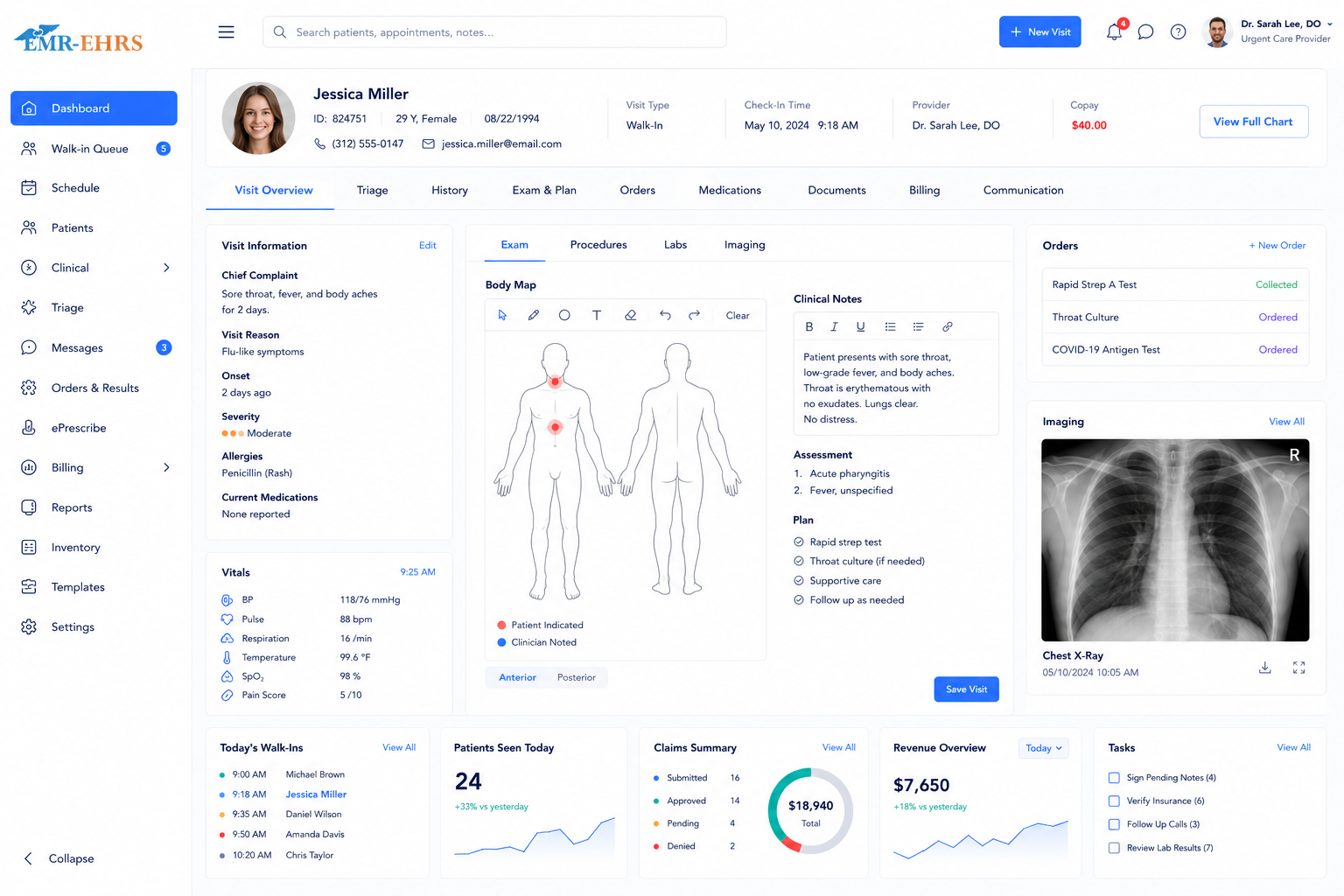
Urgent care EHR software helps urgent care centers manage walk-in visits, same-day visits, online registration, digital check-in, eligibility verification, patient queue, triage, chief complaint documentation, vitals, urgent care templates, acute illness workflows, minor injury workflows, lab/test result review if supported, X-ray review if supported, e-prescribing, discharge instructions, visit summaries, patient communication, urgent care billing, scheduling, reporting, and secure urgent care records.
EMR-EHRs urgent care EHR software supports the full urgent care workflow: online registration, patient check-in, eligibility verification, queue management, triage, chief complaint capture, vitals, urgent care documentation, lab/test result review if supported, treatment planning, e-prescribing, discharge instructions, billing, reporting, and patient engagement.
Urgent care centers need more than general charting. They manage walk-ins, same-day visits, digital check-in, patient queue, triage, urgent care documentation, lab/test review if supported, e-prescribing, discharge instructions, urgent care billing, reporting, and secure urgent care records.
Urgent care centers need workflows for walk-ins, same-day visits, patient queue, waitlist management, triage priority, rooming status, provider assignment, visit status, and visit completion.
Front desk teams need online registration, digital check-in, demographic updates, insurance capture, eligibility review, consent forms if supported, reason for visit, patient balance alerts, and preferred pharmacy capture.
Urgent care workflows should support chief complaint, vitals, pain level, symptoms, onset, severity, allergies, medication history, exposure history if applicable, injury mechanism if applicable, urgency level, and provider handoff.
Providers need templates for fever, cough, sore throat, respiratory symptoms, flu-like symptoms, UTI, abdominal pain, rash, ear pain, sinus symptoms, minor injury, sprains, strains, wound checks, and procedure notes if supported.
Urgent care teams often need lab result review if applicable, rapid test documentation if supported, flu test results if supported, COVID test results if supported, strep test results if supported, urinalysis results if supported, X-ray review if supported, abnormal result follow-up, and patient notification.
Providers need quick access to medication history, allergies, current medications, e-prescribing, refill requests, pharmacy communication, medication instructions, and discharge medication instructions.
Urgent care visits often require visit summaries, diagnosis summaries, care instructions, medication instructions, return precautions, follow-up guidance, referral instructions if applicable, and work/school notes if supported.
Urgent care patients need access to visit summaries, lab/test results if supported, care instructions, medication refill requests, secure messages, follow-up reminders, insurance updates, and online bill pay if available.
Urgent care centers need support for walk-ins, same-day scheduling, follow-up visits, lab/test follow-ups if supported, occupational medicine visits if supported, cancellations, no-shows, reminders, provider schedules, and multi-location workflows if available.
Billing teams need eligibility verification, urgent care visit billing, procedure billing if supported, lab/test billing if applicable, X-ray billing if supported, CPT, ICD-10, modifiers, claim readiness checks, denials, payment posting, patient balances, and A/R reports.
Urgent care leaders need visibility into walk-in volume, same-day visits, wait time visibility if supported, provider productivity, visit types, lab/test follow-ups if supported, unsigned notes, claims, denials, revenue, and patient balances.
Capture demographics, contact details, insurance, reason for visit, consent forms if supported, preferred pharmacy, emergency contact, and patient communication preferences.
Track insurance eligibility, payer requirements, patient balance, co-pay collection if supported, billing alerts, missing insurance details, and missing demographic information before the visit begins.
Manage walk-in queue, same-day visits, waitlist, check-in time, rooming status, triage priority, provider assignment, ready-for-provider status, discharge status, and visit stage.
Document chief complaint, vitals, pain level, symptoms, onset, severity, allergies, medication history, exposure history if applicable, injury mechanism if applicable, urgency level, and provider handoff.
Use templates for acute illness, minor injury, respiratory symptoms, fever, cough, sore throat, flu-like symptoms, UTI, abdominal pain, rash, wound checks, sprains, strains, physicals if supported, and procedure notes if supported.
Support fever visits, cough visits, sore throat visits, respiratory symptoms, flu-like symptoms, ear pain, sinus symptoms, UTI symptoms, abdominal pain, nausea/vomiting, rash, allergic reaction if applicable, headache if applicable, treatment plan, and patient instructions.
Support sprains, strains, falls, minor trauma, back pain, joint pain, contusions, burns if applicable, wound checks, laceration documentation if supported, foreign body removal if supported, procedure notes if supported, supplies used if documented, post-procedure instructions, and follow-up plan.
Review lab results if applicable, rapid test documentation if supported, flu test results if supported, COVID test results if supported, strep test results if supported, urinalysis results if supported, pregnancy test results if supported, X-ray review if supported, outside records, uploaded documents, abnormal findings, patient notification, and follow-up tasks.
Document assessment, diagnosis support, treatment plan, medications, orders if supported, procedures if supported, referrals if applicable, follow-up instructions, patient education, and return precautions.
Manage current medications, medication history, allergies, medication changes, e-prescribing, refill requests, pharmacy communication, medication instructions, discharge medication instructions, and medication reconciliation.
Generate visit summary, diagnosis summary, discharge instructions, medication instructions, care instructions, return precautions, follow-up guidance, referral instructions if applicable, work/school notes if supported, and patient education handouts.
Support secure messages, visit summaries, lab/test result access if supported, medication refill requests, appointment requests, care instructions, follow-up reminders, insurance updates, demographic updates, online bill pay if available, and patient balance visibility if available.
Manage walk-ins, same-day visits, follow-up visits, lab/test follow-ups if supported, occupational medicine visits if supported, recurring visits, appointment reminders, cancellations, no-shows, provider schedules, and multi-location scheduling if available.
Connect documentation, diagnosis codes, CPT codes, modifiers, eligibility, procedure documentation if supported, lab/test billing if applicable, X-ray billing if supported, electronic claims, denial tracking, payment posting, patient balances, collections, unpaid claims, and A/R tracking.
Review visit volume, walk-in volume, same-day visit volume, wait time visibility if supported, provider productivity, visit types, lab/test follow-ups if supported, pending result reviews if supported, unsigned notes, follow-up tasks, claims, denials, patient balances, revenue, and operational reports.
Triage documentation should support visit organization and provider handoff while providers remain responsible for final assessment, diagnosis, treatment decisions, medication decisions, discharge instructions, and signed records.
Confirm support for laceration repair, foreign body removal, procedures, supplies tracking, or procedure billing workflows, including configuration and implementation requirements, during evaluation.
Confirm support for specific labs, test devices, imaging systems, DICOM, PACS, or lab interfaces, including connection method and implementation scope, during evaluation.
Medication and treatment decisions must remain under the provider's final review and clinical judgment.
Confirm support for occupational medicine, employer billing, drug screen, DOT physical, or employer portal workflows, including configuration and implementation requirements, during evaluation.
EMR-EHRs connects clinical, administrative, patient communication, scheduling, billing, and reporting workflows so urgent care centers can manage walk-ins, digital check-in, triage, urgent care documentation, lab/test review if supported, discharge instructions, patient communication, claims, and daily operations in one connected system.
Confirm support for specific labs, imaging systems, testing devices, clearinghouses, pharmacies, or connected systems, including connection method and implementation scope, during evaluation.
HIPAA-focused workflows, audit-friendly urgent care records, secure urgent care documentation, and design that supports secure documentation.
These reporting views support visibility into urgent care reporting, while keeping interpretation and final decisions with qualified practice staff.
AI-powered tools should support documentation and administrative efficiency while keeping providers responsible for final review, assessment, diagnosis, treatment decisions, medication decisions, discharge instructions, and signed records.
Draft support for urgent care visit notes, acute symptoms, exam findings, treatment plan, and follow-up instructions.
Help organize chief complaint, vitals, pain level, symptom onset, severity, and provider handoff details.
Support fever, cough, sore throat, UTI, rash, minor injury, and other acute visit documentation.
Help summarize care instructions, medication instructions, return precautions, and follow-up guidance for final provider review.
Prompt teams to review missing documentation, eligibility, procedure checks if applicable, and claim readiness.
Support lab/test follow-ups if supported, result review tasks, no-show insights, and scheduling reminders.
Manage walk-ins, triage, urgent care documentation, e-prescribing, discharge instructions, billing, reports, and secure patient records.
Support fast intake, digital check-in, patient queue visibility, same-day visits, chief complaint documentation, provider assignment, and visit completion.
Support acute illness documentation, minor injury visits, lab/test follow-up if supported, X-ray review if supported, treatment plans, and follow-up instructions.
Support work injury visits, employer visit documentation, physical exams, drug screen documentation if supported, return-to-work notes if supported, and employer billing if supported.
Centralize provider schedules, queues, documentation, patient communication, billing, reports, and staff workflows.
Manage records, schedules, patient communication, queues, billing, reporting, and operational visibility across locations.
Manage registration, eligibility, patient queue, demographics, co-pay tracking if supported, reminders, cancellations, no-shows, and patient balances.
Track eligibility, claims, procedures if supported, denials, patient balances, A/R, unpaid claims, and billing reports.
| Workflow Area | Generic EHR | Urgent Care EHR |
|---|---|---|
| Walk-in visits | Basic scheduling | Walk-in intake, digital check-in, queue visibility, triage priority, rooming status, and provider assignment |
| Patient queue | Manual tracking | Visit status, waitlist, ready-for-provider status, rooming status, discharge status, and wait time visibility if supported |
| Triage | General notes | Chief complaint, vitals, symptoms, pain level, urgency level, allergies, medication history, and provider handoff |
| Documentation | Standard visit notes | Acute illness templates, minor injury templates, procedure notes if supported, discharge instructions, and follow-up tasks |
| Lab/test review | Attachments only | Lab/test result review if supported, rapid test documentation if supported, abnormal result follow-up, and patient notification |
| E-prescribing | Basic medication tools | Medication history, allergies, e-prescribing, pharmacy communication, refill requests, and discharge medication instructions |
| Discharge | Manual instructions | Visit summary, care instructions, return precautions, follow-up guidance, and patient education |
| Scheduling | Standard appointments | Walk-ins, same-day visits, follow-ups, waitlists, reminders, cancellations, no-shows, and multi-provider schedules |
| Billing | General claims | Urgent care visits, procedures if supported, eligibility, CPT, ICD-10, modifiers, claim readiness, denials, and A/R |
| Reporting | Basic reports | Visit volume, walk-in volume, wait time visibility if supported, provider productivity, denials, revenue, and patient balances |
EMR-EHRs supports walk-in intake, digital check-in, triage, urgent care documentation, lab/test follow-up if supported, e-prescribing, discharge instructions, billing, reports, and secure records.
EMR-EHRs helps connect clinical, administrative, patient communication, scheduling, billing, and financial workflows for urgent care centers.
Track patient queue, rooming status, provider assignment, visit status, follow-up tasks, unsigned notes, claims, and patient balances.
EMR-EHRs helps teams manage eligibility, claims, denials, patient balances, walk-ins, same-day visits, follow-ups, cancellations, no-shows, and reminders.
Support registration, visit summaries, lab/test result access if supported, secure messages, refill requests, follow-up reminders, and online bill pay if available.
EMR-EHRs helps urgent care centers configure templates, intake workflows, queue workflows, schedules, billing workflows, patient portal workflows, reports, and staff workflows. Phone: (480) 782-1116. Email: jason@1stproviderschoice.com.
Review intake, check-in, eligibility, queue, triage, urgent care templates, lab/test review if supported, X-ray review if supported, e-prescribing, discharge instructions, scheduling, billing, patient portal, and reporting goals.
Set up users, roles, urgent care templates, schedules, intake forms, reminders, billing settings, portal workflows, reports, access controls, and queue workflows.
Configure walk-in intake, digital check-in, queue management, triage templates, acute visit templates, minor injury templates, procedure documentation if supported, lab/test result review if supported, X-ray review workflow if supported, e-prescribing workflow, discharge instructions, billing workflows, follow-up tasks, and reporting views.
Train providers, medical assistants, front desk staff, billing teams, and administrators.
Support your urgent care team during launch.
Improve templates, forms, queue workflows, reports, billing workflows, portal workflows, reminder workflows, and staff adoption after launch.










Simplify walk-in intake, online registration, digital check-in, eligibility verification, patient queue management, triage, urgent care documentation, acute illness visits, minor injury visits, lab/test result review if supported, X-ray review if supported, e-prescribing, discharge instructions, patient communication, urgent care scheduling, billing, reporting, and secure urgent care records with urgent care EHR software from EMR-EHRs.
Phone:(480) 782-1116 Email:jason@1stproviderschoice.com