Mental Health EMR Software

Mental Health EMR Software Built for Intake, Assessments, Therapy Notes, Treatment Plans, Scheduling, and Billing

EMR-EHRs Mental Health EMR Software helps behavioral health teams manage intake, assessments, treatment plans, progress notes, scheduling, patient communication, billing, and secure documentation in one connected system.
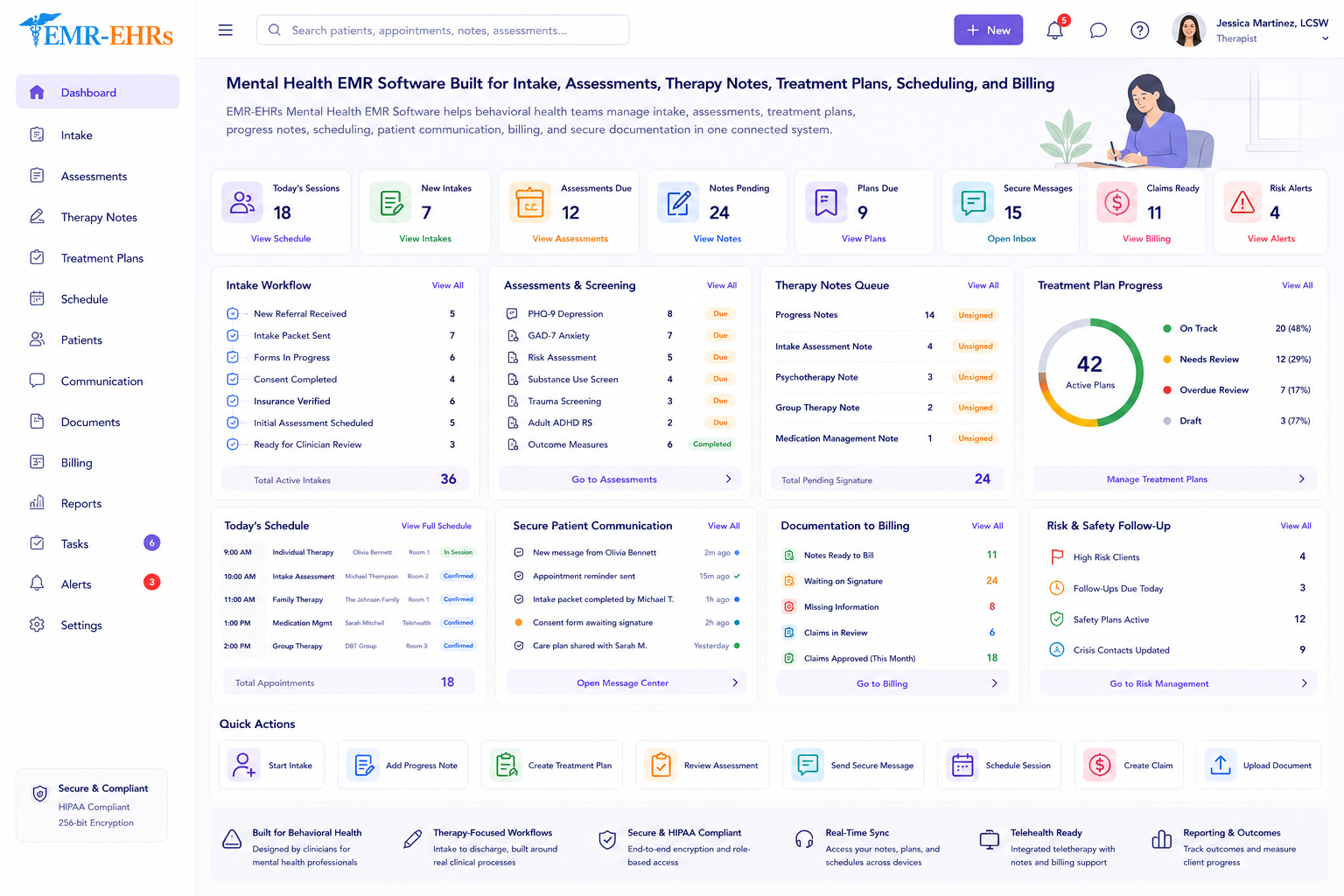
Mental Health EMR BoardAI documentation suggestion

Today's Schedule

Intake - therapy session - medication follow-up - group therapy

Client check-in status visible

Forms / Assessment

Intake, consent, privacy, risk and safety flags

Clinical Plan

Diagnosis, treatment plan, outcome tracking

Notes / Meds

SOAP / DAP / BIRP options, refill request task

Portal / Billing

Patient portal message, billing-ready indicator, AI note prompt.

Mental health workflow-focused EMRIntake, consent, and assessment documentationTherapy notes, progress notes, and treatment plansPsychiatry medication review workflow supportRisk, safety, and outcome tracking workflowsScheduling and billing integrationPowered by EMR-EHRs
Quick answer

What Is Mental Health EMR Software?

Mental health EMR software is a digital record system designed for therapists, counselors, psychiatrists, behavioral health providers, and mental health clinics. EMR-EHRs helps practices manage client intake forms, consent forms, assessments, diagnoses, treatment plans, therapy notes, progress notes, medication follow-ups, outcome tracking, scheduling, billing, patient communication, and secure behavioral health records.

Mental Health EMR Software for Therapy, Counseling, Psychiatry, and Behavioral Health Practices

Therapists and Counselors

EMR-EHRs supports intake forms, consent forms, therapy notes, treatment plans, progress notes, appointment scheduling, billing, and secure client communication.

Psychiatry Practices

EMR-EHRs supports psychiatric evaluations, medication follow-up notes, medication review, refill requests, diagnosis documentation, treatment plans, scheduling, billing, and patient communication.

Behavioral Health Clinics

EMR-EHRs supports multi-provider documentation, assessments, care plans, therapy notes, psychiatry workflows, billing, reporting, staff access control, and patient portal communication.

Group Therapy Practices

EMR-EHRs supports group session scheduling, group therapy documentation, attendance tracking, treatment plan updates, billing workflows, and follow-up communication.

Child, Adolescent, and Family Therapy Practices

EMR-EHRs supports family history, guardian communication, consent tracking, therapy notes, treatment plans, appointment reminders, and secure documentation workflows.

Substance Use and Recovery-Focused Programs

EMR-EHRs can support intake documentation, consent forms, progress notes, treatment plans, referral tracking, care coordination, and secure records with careful compliance wording.

Multi-Provider Mental Health Groups

EMR-EHRs supports shared records, provider schedules, role-based access, standardized documentation templates, billing workflows, reporting dashboards, and client communication.

Telehealth-Ready Behavioral Health Practices

EMR-EHRs supports documentation, scheduling, patient communication, forms, and follow-up workflows for practices that provide virtual mental health services where available.

Why Mental Health Practices Need Specialty-Specific EMR Software

Mental health care requires more than basic medical charting
Providers need intake forms, consent forms, assessments, diagnosis documentation, therapy notes, progress notes, treatment plans, and follow-up tracking
Therapy documentation often requires SOAP, DAP, BIRP, narrative, treatment plan, and progress note workflows
Psychiatry workflows need psychiatric evaluations, medication review, refill requests, allergy review, medication follow-up notes, and patient instructions
Behavioral health practices often manage sensitive client records, secure communication, access control, and audit trails
Treatment plans require goals, measurable objectives, interventions, progress tracking, review dates, and discharge planning
Group therapy and family therapy workflows need attendance, participation notes, session topics, treatment plan updates, and billing-ready documentation
Risk and safety documentation requires careful tracking of risk assessments, safety plans, crisis follow-up tasks, and secure access controls
Billing depends on accurate documentation, CPT codes, ICD codes, session type, session duration, payer rules, eligibility, claims, denials, and payment tracking

Manage the Complete Mental Health Workflow From Intake to Long-Term Follow-Up

Step 1: Appointment Scheduling

  • Provider calendar
  • New client intake appointments
  • Individual therapy sessions
  • Psychiatry evaluations
  • Medication follow-ups
  • Group therapy sessions
  • Family therapy sessions
  • Treatment plan reviews
  • Crisis follow-up appointments
  • Discharge planning visits
  • Recurring appointment support
  • Appointment reminders
  • Waitlist support
  • Same-day schedule view

Step 2: Digital Intake, Consent, and Client History

  • Online intake forms
  • Client demographic forms
  • Insurance forms
  • Consent forms
  • Privacy forms
  • Release of information forms
  • Guardian or family forms where applicable
  • Mental health history
  • Presenting concerns
  • Prior treatment history
  • Medication history
  • Allergy review
  • Trauma history where clinically appropriate
  • Substance use history where clinically appropriate
  • Risk screening forms
  • Document upload
  • Client check-in status

Step 3: Mental Health Assessments and Screening

  • Initial assessment documentation
  • Psychosocial assessment
  • Diagnostic assessment
  • Depression screening documentation
  • Anxiety screening documentation
  • Substance use screening where applicable
  • Suicide risk screening where clinically appropriate
  • Safety risk review
  • Functional status documentation
  • Outcome score tracking where available
  • Assessment score trends where available
  • Assessment review dates
  • Follow-up task creation

Step 4: Diagnosis and Clinical Formulation

  • Diagnosis documentation
  • ICD coding support
  • Presenting problem documentation
  • Clinical history summary
  • Symptom tracking
  • Functional impairment notes
  • Risk factors
  • Protective factors
  • Clinical formulation
  • Treatment recommendations
  • Follow-up plan

Step 5: Treatment Plan Creation and Review

  • Treatment plan documentation
  • Problem list
  • Client goals
  • Measurable objectives
  • Planned interventions
  • Frequency of care
  • Responsible provider
  • Progress tracking
  • Treatment plan review dates
  • Client participation notes
  • Discharge goals
  • Provider signature

Step 6: Therapy Session Documentation

  • Individual therapy notes
  • Progress notes
  • SOAP notes
  • DAP notes
  • BIRP notes
  • Narrative notes
  • Session focus
  • Interventions used
  • Client response
  • Progress toward goals
  • Homework or care instructions
  • Next session plan
  • Provider signature
  • Billing-ready documentation

Step 7: Psychiatry Medication Management

  • Psychiatric evaluation notes
  • Medication follow-up documentation
  • Medication history
  • Allergy review
  • Medication adherence notes
  • Side effect review
  • Refill request management
  • E-prescribing workflow where available
  • Prior authorization tracking
  • Pharmacy communication
  • Patient medication instructions

Step 8: Risk, Safety, and Crisis Follow-Up

  • Risk assessment documentation
  • Suicide risk screening where clinically appropriate
  • Safety plan documentation
  • Crisis follow-up tasks
  • Protective factor notes
  • Emergency contact documentation
  • Referral documentation
  • Follow-up reminders
  • Secure documentation access controls

Step 9: Group Therapy and Family Therapy Workflows

  • Group therapy scheduling
  • Group session documentation
  • Attendance tracking
  • Group topic notes
  • Individual participation notes
  • Treatment plan updates
  • Family therapy notes
  • Guardian or family communication where applicable
  • Billing-ready group documentation

Step 10: Outcome Tracking and Progress Review

  • Outcome score tracking where available
  • Symptom progress tracking
  • Treatment goal progress
  • Assessment score trends where available
  • Functional status review
  • Treatment plan review reminders
  • Progress reports
  • Discharge readiness notes

Step 11: Patient Portal and Communication

  • Online appointment requests
  • Intake form completion
  • Consent form completion
  • Demographic updates
  • Insurance updates
  • Secure messaging
  • Appointment reminders
  • Medication instructions
  • Prescription refill requests
  • Assessment forms where available
  • Treatment plan communication where appropriate
  • Patient education
  • Payment access

Step 12: Billing and Claim Readiness

  • CPT coding support
  • ICD coding support
  • Therapy visit coding support
  • Psychiatry visit coding support
  • Group therapy coding support
  • Intake assessment billing support
  • Treatment plan documentation support
  • Session duration documentation
  • Eligibility verification
  • Prior authorization tracking
  • Superbill creation
  • Claim submission support
  • Claim status tracking
  • Payment posting
  • Denial tracking
  • Patient responsibility tracking
  • Documentation-to-claim workflow
  • Billing reports

Mental Health Templates for Intake, Assessments, Therapy Notes, Treatment Plans, and Follow-Ups

Show real mental health documentation types rather than only generic custom templates.

Intake assessment templates
Psychosocial assessment templates
Diagnostic assessment templates
Treatment plan templates
Treatment plan review templates
Individual therapy note templates
Progress note templates
SOAP note templates
DAP note templates
BIRP note templates
Narrative note templates
Psychiatry evaluation templates
Medication follow-up templates
Group therapy templates
Family therapy templates
Crisis follow-up templates
Safety plan templates
Discharge summary templates
Custom mental health templates

Digital Intake, Consent Forms, and Client History Management

Support complete intake, consent, privacy forms, release forms, and history before treatment starts.

Online intake forms
Client demographic forms
Insurance forms
Consent forms
Privacy forms
Release of information forms
Guardian forms where applicable
Mental health history
Presenting concerns
Prior treatment history
Medication history
Allergy review
Trauma history where clinically appropriate
Substance use history where clinically appropriate
Document upload
Client check-in status

Mental Health Assessments, Screening, and Outcome Tracking

Use general screening and outcome language unless specific named tools are verified by EMR-EHRs.

Initial assessment documentation
Psychosocial assessment
Diagnostic assessment
Depression screening documentation
Anxiety screening documentation
Substance use screening where applicable
Suicide risk screening where clinically appropriate
Safety risk review
Functional status documentation
Outcome score tracking where available
Assessment score trends where available
Follow-up task creation

Treatment Plan, Goals, Objectives, Interventions, and Progress Tracking

Treatment plans are central to behavioral health documentation and payer review.

Treatment plan documentation
Problem list
Client goals
Measurable objectives
Planned interventions
Frequency of care
Responsible provider
Progress toward goals
Treatment plan review dates
Client participation notes
Discharge goals
Provider signature

Therapy Notes, Progress Notes, SOAP, DAP, and BIRP Documentation

Support therapy notes, progress notes, treatment plans, and session documentation in the formats mental health teams expect.

Individual therapy notes
Progress notes
SOAP notes
DAP notes
BIRP notes
Narrative notes
Session focus
Interventions used
Client response
Progress toward goals
Homework or care instructions
Next session plan
Provider signature
Billing-ready documentation

Psychiatry Medication Management and Follow-Up Workflows

Use e-prescribing workflow where available unless specific psychiatry e-prescribing capabilities are verified.

Psychiatric evaluation notes
Medication follow-up documentation
Medication history
Allergy review
Medication adherence notes
Side effect review
Refill request management
E-prescribing workflow where available
Prior authorization tracking
Pharmacy communication
Patient medication instructions

Risk Assessment, Safety Planning, and Crisis Follow-Up Workflows

Keep risk and safety content focused on documentation and workflow support with careful clinical safety wording.

Risk assessment documentation
Suicide risk screening where clinically appropriate
Safety plan documentation
Crisis follow-up tasks
Protective factor notes
Emergency contact documentation
Referral documentation
Follow-up reminders
Secure documentation access controls

Group Therapy and Family Therapy Documentation

Group therapy scheduling
Group session documentation
Attendance tracking
Group topic notes
Individual participation notes
Treatment plan updates
Family therapy notes
Guardian or family communication where applicable
Billing-ready group documentation

Outcome Tracking and Progress Review

Support modern behavioral health needs around progress measurement, outcome tracking, and treatment plan review.

Outcome score tracking where available
Symptom progress tracking
Treatment goal progress
Assessment score trends where available
Functional status review
Treatment plan review reminders
Progress reports
Discharge readiness notes

Mental Health Scheduling Software for Therapy, Psychiatry, and Group Sessions

Provider calendar
New client intake appointments
Individual therapy sessions
Psychiatry evaluations
Medication follow-ups
Group therapy sessions
Family therapy sessions
Treatment plan reviews
Crisis follow-up appointments
Discharge planning visits
Recurring appointment support
Waitlist support
Appointment reminders
Same-day schedule view

Digital Intake and Mental Health Patient Check-In

Online intake forms
Client demographics
Insurance forms
Consent forms
Privacy forms
Release of information forms
Mental health history forms
Medication and allergy forms
Prior treatment history forms
Screening forms where available
Guardian forms where applicable
Form completion alerts
Client check-in status
Document upload

Mental Health Billing and Coding Software for Cleaner Claims

Connect billing to therapy notes, treatment plans, psychiatry notes, session duration, group therapy documentation, eligibility, claims, denials, and payment tracking.

CPT coding support
ICD coding support
Therapy visit coding support
Psychiatry visit coding support
Group therapy coding support
Intake assessment billing support
Treatment plan documentation support
Session duration documentation
Eligibility verification
Prior authorization tracking
Superbill creation
Claim submission support
Claim status tracking
Payment posting
Denial management
Patient responsibility tracking
Documentation-to-claim workflow
Billing reports

Patient Portal for Forms, Messages, Appointments, Refills, and Follow-Up

A patient portal helps mental health practices reduce phone calls and paperwork by allowing clients to complete intake forms, sign consent forms, request appointments, receive reminders, send secure messages, request refills, receive care instructions, complete assessments where available, and make payments online.

Online appointment requests
Intake form completion
Consent form completion
Demographic updates
Insurance updates
Secure messaging
Appointment reminders
Medication instructions
Prescription refill requests
Assessment forms where available
Treatment plan communication where appropriate
Patient education
Payment access

Mental Health Reporting, Outcome Tracking, and Practice Analytics

Appointment volume reports
Intake completion reports
Treatment plan review reports
Outcome tracking reports where available
Assessment score trend reports where available
No-show reports
Provider productivity reports
Referral reports
Billing reports
Claim and denial reports
Revenue reports
Operational dashboards
Financial dashboards

AI-Powered Features That Help Mental Health Teams Document Faster

AI-powered features are designed to support documentation efficiency and workflow review. Final clinical decisions, diagnosis, treatment planning, medication decisions, safety planning, and documentation remain under provider control.

AI-assisted therapy note suggestions
Smart client history summaries
Treatment plan review prompts
Progress note suggestion prompts
Missing documentation alerts
Follow-up reminder suggestions
Coding-support prompts
Patient message assistance
Chart review support
Outcome review prompts where available

Generic EMR vs Mental Health-Specific EMR Software

AreaGeneric EMREMR-EHRs Mental Health EMR
Main workflowGeneral medical visitsIntake, assessments, therapy notes, treatment plans, follow-up
DocumentationGeneral notesSOAP, DAP, BIRP, progress notes, treatment plans, discharge summaries
IntakeBasic formsMental health intake, consent, privacy, release forms, history
AssessmentsLimitedPsychosocial, diagnostic, risk, outcome, and screening documentation
Treatment plansBasic plan notesGoals, objectives, interventions, review dates, progress tracking
PsychiatryLimitedPsychiatric evaluation, medication follow-up, refill workflow support
Group therapyLimitedGroup session notes, attendance, participation, billing-ready documentation
Family therapyLimitedFamily therapy notes, guardian communication, treatment plan updates
Patient communicationBasic portalForms, reminders, secure messages, refills, assessments, payments
BillingStandard claimsTherapy, psychiatry, group therapy, intake assessment, session duration
ReportingGeneral reportsOutcomes, treatment plan reviews, no-shows, billing, provider reports
SecurityGeneral accessRole-based access, audit trails, secure behavioral health records

What to Look for in Mental Health EMR Software

Mental health-specific templates
Digital intake forms
Consent and release forms
Privacy form support
Psychosocial assessment documentation
Diagnostic assessment documentation
Treatment plan documentation
Goal and objective tracking
Therapy notes and progress notes
SOAP, DAP, and BIRP note support
Psychiatry medication follow-up support
Group therapy documentation
Family therapy documentation
Risk and safety planning documentation
Outcome tracking where available
Appointment scheduling and reminders
Patient portal and secure messaging
Mental health billing and coding support
Session duration documentation
Reporting dashboards
Role-based access and audit trails
Secure therapy note storage
Secure treatment plan storage
Data conversion support
Staff training and implementation support

Mental Health EMR Implementation, Training, and Support

1

Mental Health Workflow Review

EMR-EHRs reviews intake, consent forms, assessments, therapy documentation, psychiatry workflows, treatment plans, scheduling, billing, reporting, patient portal, and communication workflows.

2

Template and Form Setup

Set up intake templates, consent forms, assessment templates, therapy note templates, treatment plan templates, medication follow-up templates, group therapy templates, family therapy templates, and discharge summary templates.

3

Intake and Consent Setup

Configure client intake forms, privacy acknowledgments, release forms, guardian forms where applicable, document upload, and check-in workflows.

4

Assessment and Screening Setup

Configure psychosocial assessments, diagnostic assessments, risk screening documentation, outcome tracking fields where available, and follow-up tasks.

5

Treatment Plan Setup

Configure problems, goals, measurable objectives, interventions, review dates, progress tracking, discharge goals, and provider signatures.

6

Therapy Note Setup

Configure SOAP, DAP, BIRP, narrative notes, progress notes, session focus, interventions, client response, goal progress, and provider signatures.

7

Psychiatry Workflow Setup

Configure psychiatric evaluation notes, medication follow-up notes, medication history, allergy review, refill requests, prior authorization tasks, and pharmacy communication workflows where available.

8

Risk and Safety Workflow Setup

Configure risk assessment documentation, safety plan documentation, crisis follow-up tasks, referral documentation, and secure access controls.

9

Group and Family Therapy Workflow Setup

Configure group therapy sessions, attendance tracking, group topic notes, individual participation notes, family therapy notes, guardian communication where applicable, and billing-ready documentation.

10

Outcome Tracking Setup

Configure outcome score tracking where available, symptom progress review, treatment plan review reminders, progress reports, and discharge readiness notes.

11

Scheduling Configuration

Configure providers, intake visits, therapy sessions, psychiatry visits, medication follow-ups, group sessions, family sessions, treatment plan reviews, crisis follow-ups, discharge planning visits, reminders, and schedule views.

12

Billing Workflow Setup

Configure eligibility, CPT/ICD workflow, therapy visit coding, psychiatry visit coding, group therapy coding, intake billing, session duration documentation, claims, payment posting, denial tracking, and billing reports.

13

Patient Portal Setup

Configure online forms, consent completion, secure messaging, appointment requests, reminders, refill requests, assessment forms where available, education, and payment access.

14

Data Conversion Planning

Plan migration of client records, intake forms, treatment plans, therapy notes, progress notes, medication history, documents, billing data, and historical notes.

15

Staff Training

Train therapists, counselors, psychiatrists, front desk staff, billing staff, administrators, and care coordinators where applicable.

16

Go-Live Support

Support the practice during launch and workflow adoption.

17

Ongoing Optimization

Improve templates, intake workflows, therapy notes, treatment plan reviews, outcome tracking where available, patient portal use, billing workflows, reports, reminders, and staff adoption after launch.

Why Choose EMR-EHRs for Mental Health EMR Software?

Talk to an EMR-EHRs specialist to see how our mental health EMR software can support your behavioral health workflow.
Mental health workflow-focused EMR structure
Intake, consent, assessment, treatment plan, therapy note, and progress note support
SOAP, DAP, BIRP, narrative, and progress note documentation support
Psychiatry medication follow-up workflow support
Group therapy and family therapy documentation support
Risk, safety planning, and crisis follow-up documentation support
Outcome tracking and progress review support where available
Scheduling, billing, reporting, and patient portal support
Custom mental health templates and forms
Secure behavioral health record management workflows
Implementation, training, and data conversion assistance
Support for therapists, counselors, psychiatrists, behavioral health clinics, and multi-provider groups
Healthcare software experience
Real support contact information

HIPAA-Compliant, Secure, and Built for Healthcare Trust

Mental Health EMR Software FAQs

Mental health EMR software is a digital record system built for therapists, counselors, psychiatrists, behavioral health providers, and mental health clinics. EMR-EHRs helps practices manage intake forms, consent forms, assessments, diagnoses, treatment plans, therapy notes, progress notes, medication follow-ups, scheduling, billing, patient communication, and secure behavioral health records.
Mental health EMR software is designed around behavioral health workflows, while regular EMR software usually supports general medical charting. EMR-EHRs supports intake documentation, consent forms, psychosocial assessments, diagnostic assessments, therapy notes, progress notes, treatment plans, psychiatry medication follow-ups, group therapy documentation, billing workflows, reporting, and secure client communication.
Mental health practices should look for EMR software with digital intake forms, consent forms, assessment templates, treatment plan documentation, therapy notes, progress notes, SOAP/DAP/BIRP note support, psychiatry medication follow-up support, risk and safety documentation, group therapy documentation, scheduling, patient portal tools, secure messaging, billing support, session duration documentation, reporting dashboards, role-based access, audit trails, and implementation support.
Yes. EMR-EHRs mental health EMR software supports therapy notes, progress notes, SOAP notes, DAP notes, BIRP notes, narrative notes, treatment plans, goals, measurable objectives, interventions, progress tracking, treatment plan review dates, discharge planning, provider signatures, and billing-ready documentation.
Yes. EMR-EHRs mental health EMR software can help connect documentation with billing, scheduling, and communication workflows by supporting appointment scheduling, reminders, CPT and ICD coding, therapy visit coding, psychiatry visit coding, group therapy coding, session duration documentation, eligibility verification, claim tracking, denial tracking, secure messaging, intake forms, refill requests, and patient portal communication.

Ready to Improve Your Mental Health Workflow With EMR-EHRs?

See how EMR-EHRs can help your mental health practice manage intake forms, consent forms, assessments, treatment plans, therapy notes, progress notes, medication follow-ups, risk documentation, outcome tracking, scheduling, billing, patient communication, reporting, and secure records from one connected system.

Email: info@emr-ehrs.com