EMR Projects Can Lose Direction Without Clear Scope
Without clear scope, projects can expand into extra tasks, missed requirements, delayed decisions, and unclear ownership.
EMR-EHRs EMR Project Management Services help medical practices plan, organize, coordinate, track, and complete EMR implementation, setup, migration, training, testing, go-live, and post-launch activities through a structured project plan.
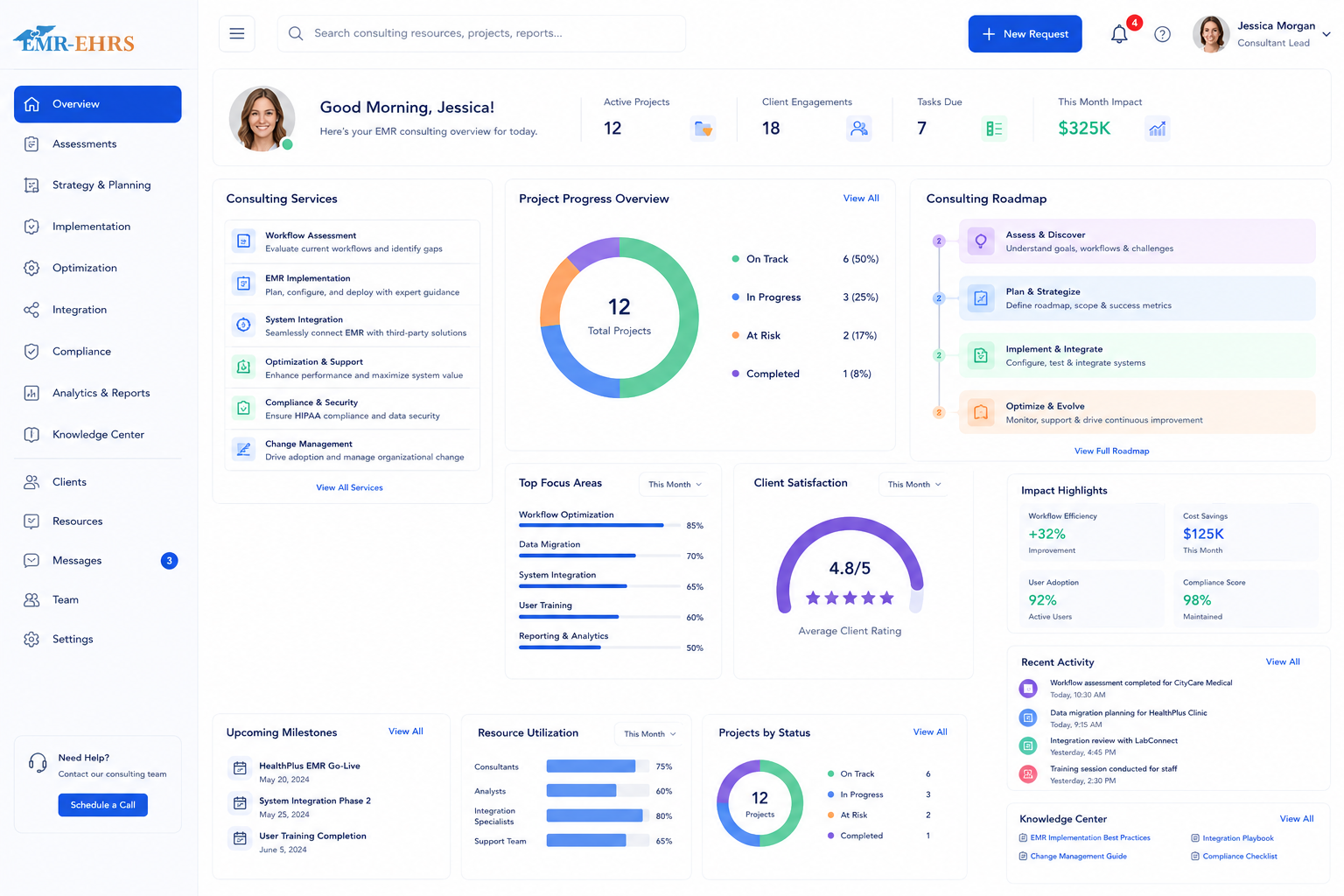
EMR project management services help medical practices plan, organize, coordinate, track, and complete EMR/EHR projects. The process can include project discovery, scope definition, stakeholder alignment, timeline planning, milestone tracking, task ownership, risk management, issue tracking, vendor coordination, data migration coordination, implementation oversight, testing coordination, training coordination, go-live readiness, post-live optimization, project reporting, and closeout.
EMR-EHRs EMR Project Management Services help practices keep EMR implementation, setup, migration, training, testing, go-live, and post-launch activities organized through a structured project plan with clear owners, timelines, risks, and status visibility.
EMR projects need strong project management because implementation, migration, workflow setup, training, testing, go-live, support, and vendor coordination can become difficult without clear scope, owners, timelines, risks, and status reporting.
Without clear scope, projects can expand into extra tasks, missed requirements, delayed decisions, and unclear ownership.
Providers, clinical staff, front desk teams, billers, managers, administrators, IT teams, and vendors may each have different priorities.
EMR projects include setup, migration, integrations, testing, training, go-live, and support tasks that often depend on each other.
When no one owns a task, project decisions, approvals, validation, testing, and go-live readiness can stall.
Clinical, front desk, billing, reporting, access, patient communication, and administrative workflows need timely decisions.
Legacy data review, export timing, test conversions, validation, corrections, archive decisions, and final migration readiness need tracking.
External vendors, clearinghouses, labs, pharmacies, IT teams, data export vendors, and payment vendors need coordinated timelines where applicable.
User setup, provider setup, permissions, templates, schedules, reports, billing workflows, and security settings need status tracking.
Without structured testing, practices may discover scheduling, documentation, billing, reporting, data, permission, or integration issues after go-live.
Providers, front desk teams, clinical staff, billers, managers, and administrators need role-based training before launch.
Launch needs a checklist, support contacts, priority issue review, owner assignment, escalation rules, and daily status visibility.
After go-live, practices still need issue trend review, workflow refinements, report changes, training gap review, and closeout planning.
EMR projects need leadership alignment, decision rights, communication, staff adoption support, and clear project governance.
AI-assisted summaries may help review status, blockers, risks, and issue trends where available, but final project decisions remain with EMR-EHRs project managers, practice leaders, administrators, providers, billers, IT teams, and vendors.
EMR-EHRs reviews practice goals, current systems, project drivers, stakeholders, deadlines, risks, workflows, locations, providers, and expected outcomes.
Define what project success means, including launch goals, workflow goals, adoption goals, reporting needs, readiness expectations, and required approvals.
Clarify what is included, what is excluded, project assumptions, dependencies, deliverables, constraints, and change request rules.
Identify project owner, decision-makers, provider champions, billing leads, front desk leads, IT leads, administrators, super users, vendors, and support contacts.
Document who owns decisions, tasks, approvals, validation, training, issue resolution, vendor follow-up, and launch readiness.
Create a project timeline with phases, milestones, due dates, dependencies, review points, launch target, and escalation paths.
Organize implementation, migration, clinical workflows, front desk workflows, billing workflows, reporting, IT, integrations, testing, training, and go-live workstreams.
Track assigned tasks, task owners, due dates, delayed items, blockers, approvals, dependencies, and status updates.
Review risk logs, issue logs, blocker lists, scope change requests, timeline risks, vendor delays, training risks, adoption risks, and mitigation plans.
Track setup tasks such as users, roles, providers, locations, schedules, templates, reports, billing workflows, permissions, and security settings where supported.
Track legacy data review, export timelines, mapping, test conversion, validation tasks, correction cycles, final migration readiness, and sign-off where supported.
Coordinate clearinghouse, lab, imaging, ePrescribing, payment, portal, IT/networking, data export, and other third-party dependencies where applicable.
Coordinate test plans, sample patient scenarios, scheduling tests, billing tests, report tests, permission tests, data validation tests, integration tests, issue correction, and sign-off.
Plan provider training, clinical staff training, front desk training, billing training, manager training, administrator training, super-user readiness, and refresher needs.
Confirm staff readiness, workflow readiness, data readiness, integration readiness, report readiness, permission readiness, training readiness, support contacts, and final launch approval.
Track launch issues, priority items, support requests, owner assignment, escalation, workflow questions, configuration issues, data issues, and stabilization needs.
Review issue trends, adoption, workflow refinements, report changes, training gaps, open items, optimization recommendations, and future phase needs.
Complete project status summaries, decision logs, issue summaries, closeout documentation, open-item handoff, lessons learned, and support transition.
Coordinate with EMR Implementation, Installation and Setup Services where supported.
Coordinate with EMR Data Migration and Conversion Services where supported.
AI-assisted project management tools should support project visibility, summaries, and risk review while EMR-EHRs project managers, practice leaders, administrators, providers, billers, IT teams, and vendors remain responsible for final decisions, approvals, and project actions.
Need project decisions that protect charting workflows, patient care, documentation, training, and go-live readiness.
Need workflow clarity, role-based training, task ownership, issue support, and readiness before implementation changes affect daily work.
Need scheduling, registration, check-in, check-out, forms, eligibility, and patient flow decisions coordinated before go-live.
Need charge workflows, claims, payment posting, collections, denial workflows, reporting tasks, and billing readiness coordinated where supported.
Need timeline visibility, task ownership, staff readiness, risk tracking, launch status, and operational accountability.
Need governance, approvals, access decisions, documentation, project reports, and escalation paths.
Need coordination around devices, networks, integrations, access, security, support, and go-live technical readiness.
Need standardized timelines, location readiness, stakeholder coordination, cross-location workflow consistency, and project visibility.
| Project Area | Informal Internal Coordination | EMR-EHRs Project Management Services |
|---|---|---|
| Scope | Often unclear | Defined scope, deliverables and success criteria |
| Timeline | Basic target dates | Milestones, owners and dependencies |
| Stakeholders | Ad hoc communication | Role-based stakeholder alignment |
| Tasks | Scattered notes | Task ownership and status tracking |
| Risks | Identified late | Risk log and mitigation planning |
| Changes | Handled informally | Change request process and decision log |
| Vendors | Staff follow up manually | Vendor coordination where supported |
| Migration | Unclear ownership | Migration tracking and validation support where supported |
| Testing | Informal review | UAT coordination and issue tracking |
| Training | Scheduled late | Role-based training coordination |
| Go-live | Reactive support | Readiness checklist and launch support |
| Reporting | Limited updates | Project status reports and closeout documentation |
This conceptual workflow preview shows how milestones, workstreams, risks, testing, training and go-live readiness can be coordinated across an EMR project.
Implementation, migration, IT, training and go-live.
Blockers, issue priority and mitigation status.
UAT, training and launch checklist progress.
Post-live optimization and open-item handoff.
Assess project support by governance, ownership, risk tracking, testing coordination, change control, communication cadence and post-launch handoff.
EMR-EHRs helps define scope, milestones, owners, dependencies, deliverables, and project success criteria.
EMR-EHRs coordinates project tasks around clinical, front desk, billing, reporting, IT, and administrative workflows.
EMR-EHRs helps track timelines, task dependencies, delayed items, project risks, and launch readiness.
EMR-EHRs helps align providers, staff, billers, managers, administrators, IT teams, vendors, and super users where supported.
EMR-EHRs helps track setup, migration, validation, configuration, vendor dependencies, and go-live readiness where supported.
EMR-EHRs helps manage blockers, risks, scope changes, timeline issues, decision logs, escalation paths, and project updates.
EMR-EHRs supports UAT coordination, role-based training planning, readiness checklists, launch support, and stabilization tracking.
EMR-EHRs helps practice leaders review task status, risks, issues, timelines, open items, and closeout documentation.
EMR-EHRs helps review workflow refinements, issue trends, training gaps, open items, ownership handoff, and closeout reports.
EMR-EHRs can support project summaries, risk summaries, blocker summaries, meeting summaries, and go-live readiness summaries where available.
Review practice goals, current systems, workflows, stakeholders, risks, locations, providers, project constraints, and expected outcomes.
Define scope, exclusions, success criteria, milestones, owners, deliverables, approvals, communication plan, and escalation path.
Coordinate implementation, migration, configuration, workflow setup, IT, integrations, reports, training, and vendor tasks where supported.
Coordinate UAT, scenario testing, issue correction, role-based training, staff readiness, and launch checklist review.
Track support requests, launch issues, owner assignments, urgent blockers, huddles, escalation, and stabilization needs.
Review open items, workflow refinements, training gaps, issue trends, ownership handoff, closeout report, and future phase recommendations.
EMR project management services help medical practices plan, organize, coordinate, track, and complete EMR projects. EMR-EHRs EMR Project Management Services can include project discovery, scope definition, stakeholder alignment, timeline planning, milestone tracking, task ownership, risk tracking, issue management, testing coordination, training coordination, go-live readiness, project reporting, and closeout.
EMR-EHRs helps manage EMR implementation projects by tracking project scope, owners, milestones, workstreams, implementation tasks, data migration tasks where supported, vendor dependencies, testing, training, go-live readiness, launch issues, and post-live closeout. This helps practices keep providers, staff, billers, managers, IT teams, and vendors aligned.
An EMR project plan should include project goals, scope, exclusions, success criteria, stakeholders, responsibility matrix, timeline, milestones, workstreams, task owners, risk log, issue log, change request process, vendor dependencies, testing plan, training plan, go-live checklist, communication plan, reporting cadence, and closeout steps.
EMR-EHRs helps reduce EMR rollout risk by tracking blockers, delayed tasks, scope changes, vendor dependencies, migration readiness where supported, testing gaps, training readiness, unresolved issues, escalation rules, launch checklist items, and post-live stabilization needs. This gives practices better visibility before and after go-live.
After EMR go-live, EMR-EHRs can help track launch stabilization, open issues, issue trends, workflow refinements, report updates, training gaps, support transition, ownership handoff, closeout documentation, and future phase planning where supported. This helps the project move from launch to stable daily use.
Plan, coordinate, track, and launch your EMR project with EMR-EHRs EMR Project Management Services for scope control, timelines, stakeholder alignment, risk tracking, issue management, implementation coordination, migration coordination where supported, testing coordination, training coordination, go-live readiness, project reporting, and post-live closeout.
Phone: (480) 782-1116 | Email: jason@1stproviderschoice.com