Detailed Eye Exam Documentation
Eye care providers need structured charting for visual acuity, refraction, IOP, pupils, EOM, confrontation fields, slit lamp findings, lens, retina, fundus, and assessment.
EMR-EHRs Ophthalmology EMR Software helps eye care practices manage exams, vision findings, diagnostic images, prescriptions, procedures, surgery planning, billing, scheduling, and reporting in one connected system.
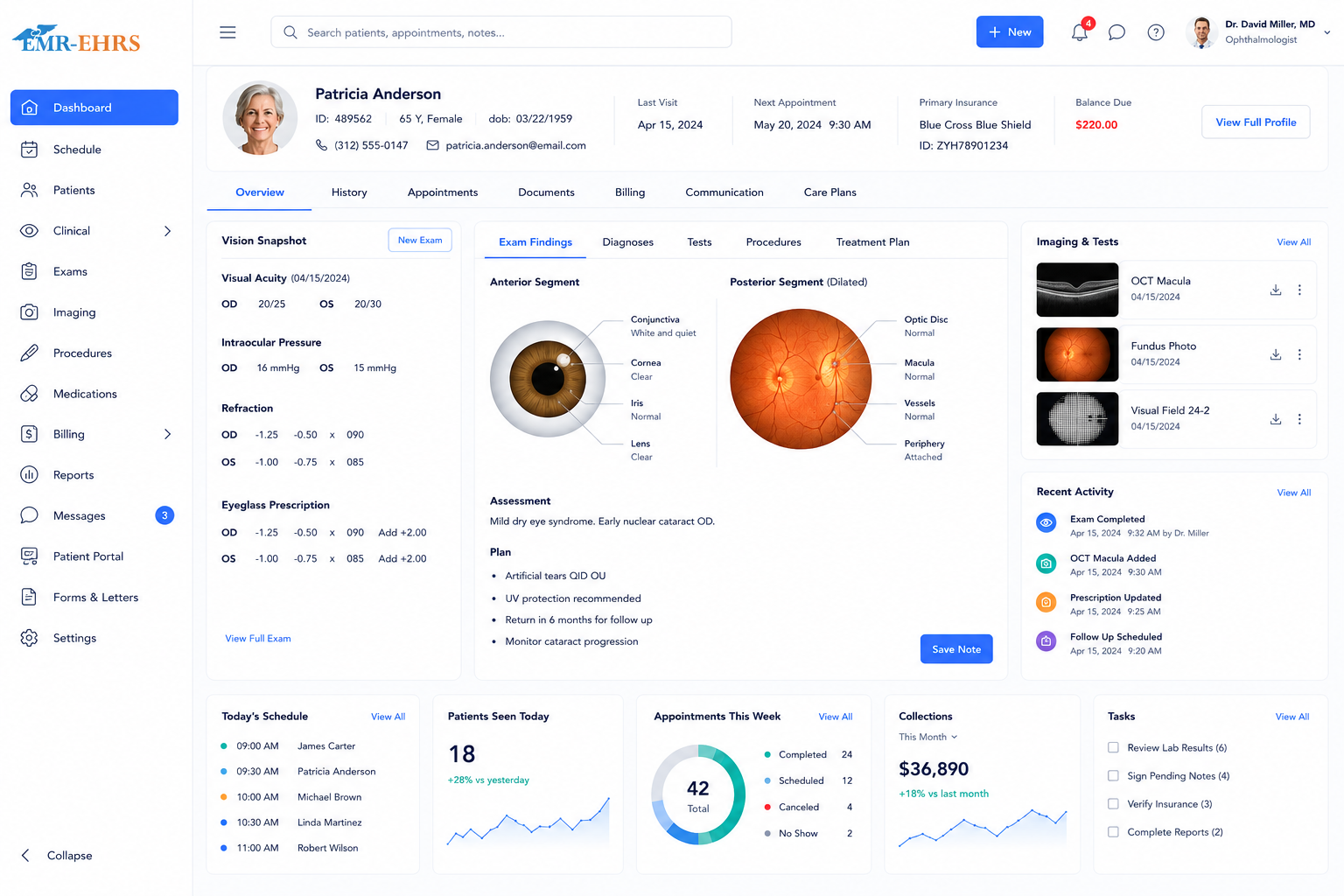
Ophthalmology EMR software is a specialty electronic medical record system that helps eye care practices manage patient charts, eye exams, visual acuity, refraction, IOP, diagnostic images, OCT reports, fundus images, visual fields, prescriptions, procedures, surgery planning, billing, scheduling, patient communication, reporting, and long-term eye disease tracking.
EMR-EHRs ophthalmology EMR software supports the full eye care workflow: patient intake, vision history, eye exam documentation, diagnostic testing, image review, diagnosis, treatment planning, prescriptions, procedure documentation, surgery coordination, billing, reporting, and patient engagement.
Ophthalmology practices manage vision history, detailed eye exams, diagnostic images, chronic eye disease tracking, prescriptions, optical workflows, procedures, surgical planning, prior authorizations, billing, quality reporting, and patient follow-up. A generic EMR often does not provide enough structure for ophthalmology charting, diagnostic imaging, IOP trends, visual acuity tracking, retina workflows, glaucoma care, cataract planning, and surgery coordination.
Eye care providers need structured charting for visual acuity, refraction, IOP, pupils, EOM, confrontation fields, slit lamp findings, lens, retina, fundus, and assessment.
OCT reports, fundus photos, visual fields, topography, pachymetry, biometry, and outside imaging can be difficult to manage when they are not connected to the patient chart.
Glaucoma, diabetic retinopathy, macular degeneration, cataracts, dry eye, retina conditions, and post-surgical follow-ups require trend-based tracking.
Cataract surgery, laser procedures, injections, post-op visits, consent forms, medication instructions, and procedure notes need structured coordination.
Eye care teams need accurate eyeglass prescriptions, contact lens prescriptions where supported, medication history, refill workflow, and optical-related documentation.
Imaging, procedures, medications, surgery, injections, and specialty testing may require payer approvals and supporting documentation.
Ophthalmology billing may include eye exams, diagnostic testing, procedures, injections, surgery-related visits, modifiers, claim readiness, denials, and unpaid claims.
Patients need appointment reminders, surgery instructions, medication instructions, test results, portal messages, education, and follow-up guidance.
Practices need reports for exams, procedures, diagnostic orders, surgeries, authorizations, claims, denials, revenue, no-shows, provider productivity, and quality measures where supported.
Capture demographics, insurance, chief complaint, vision history, ocular history, family history, medications, allergies, prior eye surgeries, contact lens history, and outside records.
Document visual acuity, refraction, lensometry, IOP, pupils, EOM, confrontation fields, color vision, and screening results.
Record distance vision, near vision, pinhole acuity, uncorrected vision, best corrected visual acuity, manifest refraction, prescription history, and final prescription details.
Track intraocular pressure, tonometry method, target IOP, cup-to-disc ratio, pachymetry, visual field status, OCT nerve/RNFL findings, and glaucoma risk factors.
Record external exam, slit lamp findings, cornea, anterior chamber, iris, lens, vitreous, retina, optic nerve, macula, vessels, periphery, and fundus findings.
Manage OCT, fundus photos, visual fields, pachymetry, topography, biometry, ultrasound, imaging reports, outside records, provider review tasks, and follow-up reminders.
Document diagnosis, assessment, treatment plan, prescriptions, procedure recommendations, surgery planning, patient education, and follow-up timeline.
Track IOP trends, cup-to-disc ratio, visual field changes, OCT changes, retina findings, diabetic eye exam status, macular degeneration progress, cataract progression, and dry eye response.
Document injections, laser procedures, minor procedures, cataract planning, surgical consent, pre-op tasks, post-op visits, medication instructions, and follow-up care.
Manage eyeglass prescriptions, contact lens prescriptions if supported, medication prescriptions, refills, prior authorizations, optical orders if supported, and patient instructions.
Track imaging approvals, procedure approvals, medication authorizations, surgery authorizations, injection authorizations if applicable, expiration dates, missing documentation, and staff worklists.
Connect documentation, diagnosis codes, procedure codes, diagnostic testing, laterality, modifiers, authorizations, claim readiness, electronic claims, denials, payments, and unpaid claims.
Review clinical, operational, quality, and financial reports for practice performance and patient care visibility.
EMR-EHRs helps ophthalmology practices organize diagnostic orders, image attachments, provider review tasks, trend comparison, and follow-up documentation. Specific diagnostic devices or image viewers should only be listed when verified.
EMR-EHRs helps ophthalmology practices monitor eye disease progression, compare findings over time, track treatment response, and keep follow-up tasks visible across the patient chart.
EMR-EHRs helps eye care teams document procedures, manage pre-op and post-op workflows, track laterality, organize patient instructions, and keep follow-up tasks connected to the patient chart.
EMR-EHRs connects clinical, administrative, optical, and financial workflows so ophthalmology practices can manage patient care, diagnostic testing, billing, patient communication, and reporting without relying on disconnected systems.
Only specific diagnostic devices, imaging systems, clearinghouses, labs, or integration partners should be listed when verified. This page uses careful workflow wording for connected documentation and exchange needs.
HIPAA-focused workflows, audit-friendly records, secure patient record management, and design that supports secure documentation for eye care records.
AI-powered tools should support documentation and administrative efficiency while keeping ophthalmologists responsible for final review, image interpretation, diagnosis, treatment decisions, and signed records.
Draft support for eye exam documentation and follow-up note structure.
Support for summarizing diagnostic result information and image report context where available.
Prompt staff to review missing laterality, authorization, billing, or follow-up details.
Surface documentation and payer workflow gaps before delays happen.
Help teams review claim readiness, modifiers, laterality, and open documentation tasks.
Suggest follow-up tasks for glaucoma, retina, cataract, dry eye, and post-op workflows.
Manage eye exams, diagnostic images, prescriptions, procedures, scheduling, billing, patient portal access, and reporting.
Track OCT, fundus images, retina findings, diabetic eye exams, macular degeneration, injections if applicable, and follow-up care.
Monitor IOP trends, visual fields, OCT nerve/RNFL, cup-to-disc ratio, medications, progression, and follow-up plans.
Manage cataract evaluations, biometry status, surgery planning, consent, pre-op tasks, post-op visits, and patient instructions.
Document cornea findings, dry eye symptoms, contact lens history, treatment plans, prescriptions, and follow-up care.
Support pediatric vision screening, amblyopia, strabismus, refraction, parent communication, and follow-up tracking.
Manage lid findings, lesion documentation, procedure notes, consent tracking, post-procedure care, and follow-up reminders if supported.
Support prescriptions, optical workflow if available, patient communication, appointment reminders, and care coordination.
Centralize records, provider schedules, diagnostic workflows, billing, authorizations, and reports.
Manage scheduling, records, diagnostic workflows, patient communication, billing, and reporting across locations.
| Workflow Area | Generic EMR | Ophthalmology EMR |
|---|---|---|
| Eye exams | General exam notes | Visual acuity, refraction, IOP, pupils, EOM, slit lamp, lens, retina, fundus findings |
| Diagnostic images | Attachments or external systems | OCT, fundus, visual field, topography, biometry, image/report workflow |
| Glaucoma care | Manual tracking | IOP trends, target IOP, visual field changes, OCT nerve/RNFL, progression review |
| Retina care | Basic documentation | Fundus findings, OCT macula, diabetic eye exam, macular degeneration, injection history if applicable |
| Cataract workflow | General procedure notes | Cataract evaluation, biometry, IOL planning if supported, surgery coordination, post-op visits |
| Prescriptions | General prescription workflow | Eyeglass Rx, contact lens Rx if supported, ophthalmic drops, refill workflow |
| Billing | General claim workflow | Eye exams, diagnostic testing, procedures, laterality, modifiers, authorizations, denials |
| Reporting | Basic reports | Eye exam volume, diagnostic tests, quality measures, procedures, claims, denials, revenue |
EMR-EHRs supports eye exam documentation, diagnostic image workflows, prescriptions, procedures, scheduling, billing, patient engagement, and reporting.
EMR-EHRs helps connect clinical, administrative, optical, and billing workflows so eye care teams can reduce duplicate work and improve visibility.
Track visual acuity, IOP, OCT results, fundus findings, visual fields, glaucoma progression, retina findings, and follow-up tasks from one workflow.
EMR-EHRs helps teams monitor authorizations, claim readiness, unpaid claims, denials, laterality, modifiers, and billing reports.
Support intake forms, appointment reminders, prescription refills, test result access, surgery instructions, care plans, and secure portal messages.
EMR-EHRs helps ophthalmology practices configure templates, schedules, users, billing workflows, diagnostic workflows, reports, and staff workflows. Phone: (480) 782-1116. Email: jason@1stproviderschoice.com.
Review ophthalmology documentation needs, exam workflows, imaging workflows, prescriptions, optical workflow, procedures, surgery coordination, scheduling, billing, authorizations, and reporting goals.
Set up users, roles, templates, schedules, diagnostic workflows, billing settings, authorization workflows, reports, and patient portal workflows.
Configure eye exam templates, imaging/report workflows, glaucoma tracking, retina workflows, cataract templates, prescription workflows, procedure workflows, and billing workflows.
Train ophthalmologists, technicians, scribes, front desk staff, optical staff if applicable, billing teams, and administrators.
Support your team during launch.
Improve templates, workflows, billing processes, imaging workflows, reports, and team adoption after launch.












Simplify eye exam documentation, diagnostic image workflows, IOP tracking, prescriptions, procedures, surgery planning, billing, scheduling, patient portal access, and reporting with ophthalmology EMR software from EMR-EHRs.
Phone:(480) 782-1116 Email:jason@1stproviderschoice.com