Pain management EMR software

Pain Management EMR Software for Specialty Clinics, Faster Charting & Cleaner Billing

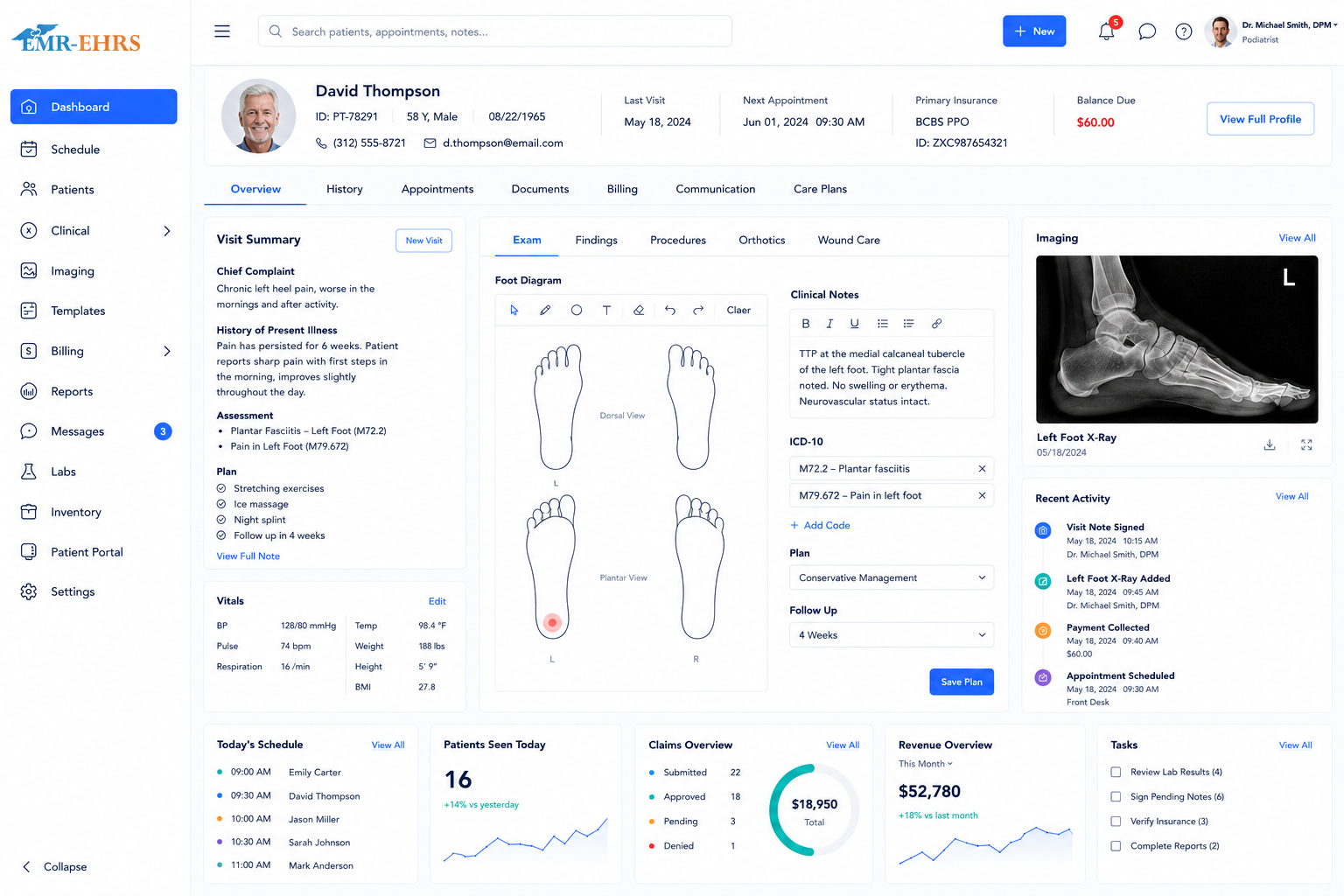
Pain Management EMR dashboard preview
Specialty EMR/EHR Workflows Pain Clinic Documentation Support Billing & Practice Management Tools Custom Setup & Training U.S. Healthcare Practice Support

Pain Management EMR Software for Every Role in Your Practice

For Pain Physicians

  • Faster charting
  • Pain-specific templates
  • Medication documentation
  • Pain score tracking
  • Procedure notes

For Interventional Pain Specialists

  • Injection workflows
  • Imaging review
  • Procedure documentation
  • Consent forms
  • Post-procedure instructions

For Practice Owners

  • Productivity visibility
  • Revenue cycle support
  • Provider performance reports
  • Patient flow improvement
  • Multi-location scalability

For Billing Managers

  • CPT and ICD-10 support
  • Modifiers
  • Eligibility verification
  • Authorization tracking
  • Claim validation
  • Denial management

For Front Desk Teams

  • Scheduling
  • Intake forms
  • Insurance collection
  • Appointment reminders
  • Referral tracking

For Compliance/Admin Teams

  • EPCS workflow support
  • PDMP documentation
  • Opioid agreement tracking
  • Audit logs
  • Role-based access

Pain Management Practices Need More Than a Generic EHR

Pain clinics manage recurring visits, procedure-heavy documentation, medication safety workflows, authorizations, imaging records, billing codes, and follow-up care that generic EHR systems may not handle efficiently.

Repetitive charting for recurring pain visits
Complex medication and opioid documentation
Interventional procedure documentation burden
Prior authorization delays
Missing referral or imaging documents
Pain score tracking gaps
CPT, ICD-10, and modifier complexity
Workers’ compensation and personal injury cases
Controlled-substance prescribing workflows
Disconnected billing and scheduling tools
Incomplete follow-up documentation
Short answer

Why do pain clinics need specialty EMR software?

Pain clinics need specialty EMR software because they manage chronic pain documentation, procedure notes, pain scores, opioid documentation, prior authorizations, imaging records, billing codes, and recurring follow-up care that generic EHR systems may not handle efficiently.

Quick answer

What Is Pain Management EMR Software?

Pain management EMR software is an electronic medical record system designed for pain clinics and pain specialists. It helps providers document visits, manage procedures, track pain scores, support medication workflows, organize prior authorizations, handle billing, and improve patient follow-up.

Unlike a general EHR, pain management EMR software should include specialty templates, procedure workflows, pain mapping, treatment progress tracking, e-prescribing support, billing tools, prior authorization tracking, imaging/document management, patient intake forms, and reporting for chronic and interventional pain care.

Essential Pain Management EMR Features for Specialty Practices

Pain-Specific Templates

Templates for initial evaluations, follow-ups, chronic pain visits, back pain, neck pain, joint pain, neuropathy, arthritis, headaches, medication management, and procedure visits.

Interventional Procedure Documentation

Structured documentation for epidural steroid injections, trigger point injections, joint injections, nerve blocks, medial branch blocks, radiofrequency ablation, SI joint injections, and spinal cord stimulator trials.

Pain Mapping & Anatomical Documentation

Body diagrams and anatomical documentation workflows for pain location, procedure sites, injection areas, and treatment response.

Pain Score & Outcome Tracking

Track pain intensity, functional status, treatment response, medication response, and long-term patient progress.

AI-Assisted Charting

AI-assisted note support for visit summaries, structured note drafts, missing documentation alerts, and follow-up task suggestions.

Medication Management

Medication history, allergies, refill tracking, medication changes, controlled-substance notes, and treatment-plan documentation.

EPCS & PDMP Workflow Support

Support controlled-substance prescribing workflows, EPCS, PDMP documentation, and safer medication review.

Prior Authorization Tracking

Track authorizations for procedures, imaging, medications, referrals, and payer requirements.

Pain Management Coding Support

Support pain-specific CPT codes, ICD-10 codes, modifiers, superbills, claim review, and documentation completeness.

Billing & RCM Support

Eligibility verification, claim validation, denial management, payment posting, billing reports, workers’ compensation, and personal injury workflows.

Patient Intake & Forms

Digital intake forms, pain questionnaires, consent forms, medication history forms, and medical history forms.

Imaging & Document Management

Store imaging reports, referrals, outside records, consent documents, lab results, and procedure-related files.

Patient Portal & Communication

Appointment reminders, secure messaging, form completion, follow-up instructions, and patient access tools.

Reporting Dashboard

Dashboard visibility into appointments, documentation status, authorizations, billing, claims, follow-ups, and productivity.

Pain Management Template Library for Faster Documentation

A clear template library shows topical depth for chronic pain, procedures, compliance, medication visits, and administrative workflows.

Evaluation Templates

  • Initial pain evaluation
  • New patient consult
  • Follow-up visit
  • Chronic pain assessment
  • Functional assessment
  • Medication review visit

Condition Templates

  • Low back pain
  • Neck pain
  • Joint pain
  • Arthritis
  • Neuropathy
  • Sciatica
  • Headache / migraine
  • Complex regional pain syndrome
  • Post-surgical pain
  • Fibromyalgia

Procedure Templates

  • Epidural steroid injection
  • Facet joint injection
  • Medial branch block
  • Trigger point injection
  • Nerve block
  • Radiofrequency ablation
  • SI joint injection
  • Joint injection
  • Spinal cord stimulator trial
  • Pain pump-related documentation

Compliance & Medication Templates

  • Opioid agreement
  • Urine drug screening note
  • Medication refill note
  • Controlled-substance review
  • PDMP review documentation
  • Risk assessment form
  • Treatment plan update

Administrative Templates

  • Prior authorization note
  • Referral note
  • Work comp documentation
  • Personal injury case note
  • Pre-procedure checklist
  • Post-procedure instruction note

AI-Assisted Documentation for Pain Management Workflows

AI Note Draft Support

AI can help organize visit details into structured note drafts for provider review.

Patient History Summarization

Summarize prior visits, medications, pain history, procedure history, and follow-up notes.

Missing Documentation Alerts

Highlight missing fields such as pain score, diagnosis, procedure detail, medication change, authorization status, or follow-up plan.

Billing Readiness Prompts

Identify documentation gaps before claims are prepared.

Follow-Up Task Suggestions

Suggest follow-up reminders, procedure scheduling tasks, or documentation items.

Safety note

AI-assisted features are designed to support documentation efficiency. Providers should review, edit, and approve all clinical notes, diagnoses, prescriptions, treatment plans, and billing-related documentation before final use.

Support for Interventional Pain Management Workflows

Pre-Procedure Workflow

  • Patient history review
  • Medication and allergy review
  • Imaging review
  • Prior authorization check
  • Consent form management
  • Pre-procedure checklist

During Procedure Documentation

  • Procedure template
  • Diagnosis selection
  • Injection site documentation
  • Laterality
  • Medication used
  • Image guidance notes
  • Provider findings
  • Complication documentation

Post-Procedure Workflow

  • Recovery notes
  • Patient instructions
  • Follow-up plan
  • Medication changes
  • Outcome tracking
  • Billing review
Epidural steroid injectionsTrigger point injectionsFacet joint injectionsMedial branch blocksNerve blocksRadiofrequency ablationSI joint injectionsJoint injectionsSpinal cord stimulator trials
Short answer

What EMR features matter most for interventional pain management?

The most important EMR features for interventional pain management are procedure templates, consent forms, imaging review, anatomical documentation, injection-site tracking, post-procedure instructions, prior authorization tracking, and procedure billing support.

Opioid Risk, MME & Medication Safety Documentation

The software can support documentation for opioid-risk and medication-safety workflows. Practices should always follow applicable federal, state, payer, and clinical requirements.

Medication history
Allergy and interaction documentation
Controlled-substance documentation
Opioid agreement forms
Risk assessment forms
Urine drug screening documentation
Refill history
PDMP review documentation
MME tracking or MME calculator support, if available
High-risk medication alerts, if available
Audit-ready medication records

EPCS, PDMP & Controlled-Substance Workflow Support

EPCS and PDMP workflows are important because pain management practices often manage controlled-substance prescriptions.

Electronic prescribing workflow
EPCS support for controlled substances
PDMP documentation support
Prescription history
Refill management
Medication review notes
Controlled-substance monitoring documentation
Audit trail support

Prior Authorization Tracking for Pain Procedures, Imaging & Medications

Pain management EMR software helps teams track authorization status, required documentation, payer notes, approvals, and staff follow-up tasks before patient visits.

Procedure authorization tracking
Medication authorization tracking
Imaging authorization
Referral authorization
Required document checklist
Payer-specific notes
Authorization status dashboard
Staff task reminders
Expiration dates
Missing document alerts

Pain Management Coding Support for CPT, ICD-10 & Modifiers

Pain management billing is procedure-heavy, so coding support should be visible and connected to documentation.

Pain-specific ICD-10 code support
CPT code support
Modifier support
Diagnosis-to-procedure documentation support
Superbill generation
Suggested coding prompts, if available
Claim-scrubbing workflow
Documentation completeness alerts
Procedure coding review
Billing handoff from clinical note

Pain Management Billing Software for Cleaner Claims & Faster Revenue Workflows

Pain management EMR software helps billing teams connect clinical documentation with CPT codes, ICD-10 codes, modifiers, authorizations, eligibility checks, superbills, claims, and denial management workflows.

Insurance eligibility verification
Superbill generation
Procedure billing support
Claim validation
Denial management
Payment posting
Patient statements
Billing reports
Authorization-to-claim workflow
Workers’ compensation billing
Personal injury billing
Clearinghouse connection, if available

Workers’ Compensation & Personal Injury Documentation Support

Pain clinics often manage occupational injury, auto injury, and long-term treatment cases.

Injury-related documentation
Work comp claim information
Employer or adjuster details
Attorney or third-party request notes
Medical record request tracking
Authorization tracking
Case notes
Procedure documentation
PI billing support
Work status notes
Referral documentation

Patient Intake, Pain Questionnaires & Follow-Up Engagement

Patient engagement deserves a dedicated workflow, not just a feature bullet.

Online intake forms
Pain questionnaires
Medical history forms
Medication history forms
Consent forms
Insurance information collection
Appointment reminders
Patient portal
Secure messaging
Follow-up instructions
Post-procedure check-ins
Patient education materials

Patient-Reported Outcomes & Functional Progress Tracking

Pain management EMR software can help track pain scores, functional status, treatment response, medication response, procedure outcomes, and patient progress across multiple visits.

Pain score history
Functional status tracking
Quality-of-life notes
Treatment response tracking
Medication response tracking
Procedure outcome tracking
Before-and-after visit comparison
Care goal updates
Patient-reported pain updates
Longitudinal progress reports

Telehealth, Remote Follow-Up & Ongoing Pain Monitoring

Pain management is recurring-care heavy, so ongoing follow-up tools matter.

Virtual follow-up visits
Medication follow-up visits
Post-procedure check-ins
Remote pain questionnaires
Patient-submitted pain scores
Secure messaging
Care-team alerts
Appointment reminders
Treatment-plan updates
Ongoing monitoring between visits

Referral Management & Care Coordination for Pain Clinics

Pain management is often multidisciplinary and document-heavy.

Referring provider records
Primary care communication
Orthopedic referrals
Neurology referrals
Physical therapy referrals
Behavioral health coordination
Imaging reports
Lab results
Outside medical records
Care-plan sharing
Document management

Eligibility, Patient Cost Estimates & Financial Transparency

Financial clarity helps staff prepare patients before procedure-based visits.

Insurance eligibility verification
Benefits verification
Procedure cost estimate support
Patient balance visibility
Payment collection support
Out-of-pocket estimate support, if available
Billing transparency
Procedure financial communication

Integrated Practice Management for Pain Clinics

Explore pain management practice management software workflows that connect clinical, administrative, and billing teams.

Appointment scheduling
Procedure scheduling
Recurring follow-ups
Provider calendars
Room/resource scheduling
Eligibility checks
Staff task management
Referral management
Document management
Reporting
Multi-provider support
Multi-location support

Pain Management EMR Integrations

Integration support helps practices understand whether the EMR fits into their current workflow.

eRx
EPCS
PDMP
Labs
Imaging
Billing clearinghouse
Eligibility verification
Patient portal
Payment tools
Telehealth
Referrals
Reporting
Document management
API or interoperability options, if available

MIPS, MACRA & Quality Reporting Support for Pain Practices

Quality and performance reporting can matter for growing pain practices.

Quality measure tracking
MIPS reporting support
MACRA-related reporting
Outcome documentation
Provider performance reports
Care-quality documentation
Audit-ready reporting
Practice performance dashboards

Real-Time Pain Clinic Dashboard

Dashboard visibility turns documentation, authorizations, procedure status, billing readiness, patient follow-up, and staff tasks into one operational view.

Real-Time Pain Clinic DashboardLive workflow view
Today’s appointments
Provider schedule
Patient chart status
Pain score trends
Open authorizations
Pending procedure notes
Billing alerts
Follow-up tasks
Missing documentation
Claims status
Patient messages
Referral status

Pain Management EMR vs Generic EHR Software

FeatureGeneric EHRPain Management EMR
Pain-specific templatesLimited or manualBuilt for chronic and interventional pain workflows
Procedure documentationRequires customizationStructured templates for injections, nerve blocks, RFA, and procedures
Pain mappingUsually limitedBody map and anatomical documentation support
Pain score trackingBasicLongitudinal pain and functional progress tracking
Medication workflowGeneralEPCS, PDMP, opioid documentation, refill tracking
Prior authorizationOften manualProcedure, medication, imaging, and referral authorization tracking
BillingGeneral billing toolsPain-specific CPT, ICD-10, modifiers, and procedure billing
Patient intakeGeneric formsPain questionnaires, history forms, consent forms
OutcomesLimitedTreatment response and patient-reported outcome tracking
Work comp / PIOften manualCase documentation and billing support
ReportingGeneral reportsPain clinic dashboard, provider productivity, billing, outcomes
Short answer

What makes pain management EMR different from generic EHR?

Pain management EMR software includes specialty templates, procedure documentation, pain mapping, opioid documentation, EPCS/PDMP workflows, prior authorization tracking, pain score tracking, and pain-specific billing tools that generic EHR systems may not include.

How to Choose the Best EMR for a Pain Management Practice

Does it include pain-specific templates?
Does it support interventional procedure documentation?
Can it track pain scores and patient outcomes?
Does it support pain mapping or anatomical diagrams?
Does it support EPCS and PDMP workflows?
Can it document opioid agreements and medication risk workflows?
Does it include prior authorization tracking?
Does it connect clinical documentation with billing?
Does it support CPT, ICD-10, and modifiers?
Can it handle workers’ compensation and PI cases?
Does it support patient intake and pain questionnaires?
Does it offer reporting dashboards?
Is it customizable for your workflow?
Does it include implementation and training?
Can it scale for multiple providers or locations?
Does it support cloud, server, or hybrid deployment?
Short answer

What should you look for in pain management EMR software?

Look for pain-specific templates, procedure documentation, pain mapping, pain score tracking, EPCS/PDMP support, opioid documentation, prior authorization tracking, coding, billing, patient intake, reporting, customization, training, and support.

Cloud-Based vs Server-Based Pain Management EMR Options

Cloud-Based EMR

  • Remote access
  • Lower internal IT burden
  • Easier multi-location access
  • Vendor-managed hosting, depending on setup

Server-Based EMR

  • Local infrastructure control
  • Custom hosting options
  • Internal IT management
  • Useful for practices with specific infrastructure requirements

Hybrid Setup

  • Combination of remote access and controlled infrastructure
  • Flexible deployment depending on practice needs

Pain management EMR deployment may be cloud-based, on-premises, or hybrid depending on infrastructure, preferences, and security requirements. Learn more about secure EMR medical servers.

How Much Does Pain Management EMR Software Cost?

Pricing depends on your setup and workflow needs. Do not rely on fake price ranges without approved pricing from the vendor.

Number of providers
Number of locations
Cloud vs server deployment
EPCS/eRx integrations
Billing and RCM features
Data migration
Template customization
Training requirements
Support level
Patient portal features
Reporting needs
Implementation complexity

Comparing Pain Management EMR Software Options

Use this educational checklist to compare options without attacking competitors directly.

Evaluation AreaWhat to Check
Specialty fitDoes it support pain management-specific workflows?
TemplatesAre pain, procedure, opioid, and follow-up templates included?
Interventional workflowDoes it support injections, nerve blocks, RFA, and procedure notes?
PrescribingDoes it support eRx, EPCS, PDMP, refill tracking, and medication documentation?
BillingDoes it support CPT, ICD-10, modifiers, claim validation, and denial workflows?
AuthorizationDoes it track procedure, medication, imaging, and referral approvals?
OutcomesCan it track pain scores, function, and treatment response?
Patient engagementDoes it include intake forms, portal, reminders, and questionnaires?
SecurityDoes it support user permissions, audit logs, and access controls?
DeploymentCloud, server-based, or hybrid?
SupportDoes the vendor provide setup, training, and ongoing support?
ScalabilityCan it support solo, group, and multi-location practices?

Implementation, Training & Support for Pain Management Teams

This answers a common buyer concern: how hard will it be to switch EMR systems?

Workflow discovery
Template customization
Data migration planning
User role setup
Provider training
Front desk training
Billing workflow setup
EPCS/eRx setup, if applicable
Reporting setup
Go-live support
Post-launch optimization
Ongoing support

Why Choose EMR-EHRS for Pain Management EMR Software?

Specialty Workflow Focus

Support for documentation, scheduling, billing, procedures, and patient follow-up workflows used in pain management practices.

Customizable EMR/EHR Setup

Configurable workflows based on provider preferences, practice size, and documentation needs.

Billing & Practice Management Support

Integrated administrative and financial workflows for scheduling, eligibility, authorizations, claims, and reporting.

Training & Implementation Help

Support for setup, onboarding, workflow configuration, and staff training.

Demo & Direct Support

Easy access to demo requests, phone support, and consultation.

What Happens After You Request a Pain Management EMR Demo?

1

Share your practice size and workflow needs

2

Review your documentation, billing, and scheduling requirements

3

See relevant pain management EMR features

4

Discuss templates, authorization tracking, and billing workflows

5

Review setup, training, and support options

6

Choose the best next step for your practice

See How Pain Management EMR Software Can Fit Your Practice

Ready to simplify pain management documentation, procedure workflows, authorizations, billing, scheduling, and follow-up care? Request a free demo to see how EMR-EHRS can support your practice workflow.

HIPAA-Compliant, Secure, and Built for Healthcare Trust

Pain Management EMR Software FAQs

Pain management EMR software should include pain-specific templates, procedure documentation, anatomical pain mapping, injection-site tracking, prior authorization tracking, EPCS/PDMP workflow support, opioid documentation, pain score tracking, coding support, and billing tools for procedure-based care.
Pain management EMR software can help organize controlled-substance workflows by supporting medication history, refill tracking, opioid agreement documentation, urine drug screening notes, risk assessment forms, EPCS workflows, and PDMP review documentation. Providers should always follow applicable federal, state, payer, and clinical requirements.
Yes. Pain management EMR software can help reduce billing errors by connecting clinical documentation with CPT codes, ICD-10 codes, modifiers, prior authorizations, eligibility checks, superbills, and claim validation workflows.
Pain management EMR software helps staff track prior authorizations for procedures, imaging, medications, referrals, and payer-specific requirements through status dashboards, document checklists, payer notes, expiration dates, task reminders, and missing document alerts.
Pain management EMR software is built around chronic pain and interventional pain workflows, while generic EHR software usually supports broader medical documentation. It should include pain templates, procedure notes, pain mapping, pain score tracking, opioid documentation, EPCS/PDMP support, authorization tracking, pain-specific coding, billing workflows, patient-reported outcomes, and follow-up care tools.
Demo request

Request a Pain Management EMR Software Demo

Make documentation, billing, procedure workflows, authorizations, and follow-up care easier to manage with a pain management EMR solution built around specialty practice needs.

Please do not include protected health information, patient records, usernames, passwords, or clinical details when contacting us.