1Patient Intake and Consent
Capture demographics, insurance, consent forms, emergency contact, preferred pharmacy, communication preferences, privacy acknowledgements, and intake details.
2Insurance, Emergency Contact, Pharmacy and Communication Preference Capture
Collect insurance details, eligibility information, emergency contact, preferred pharmacy, communication preference, and responsible party details if applicable.
3Behavioral Health History
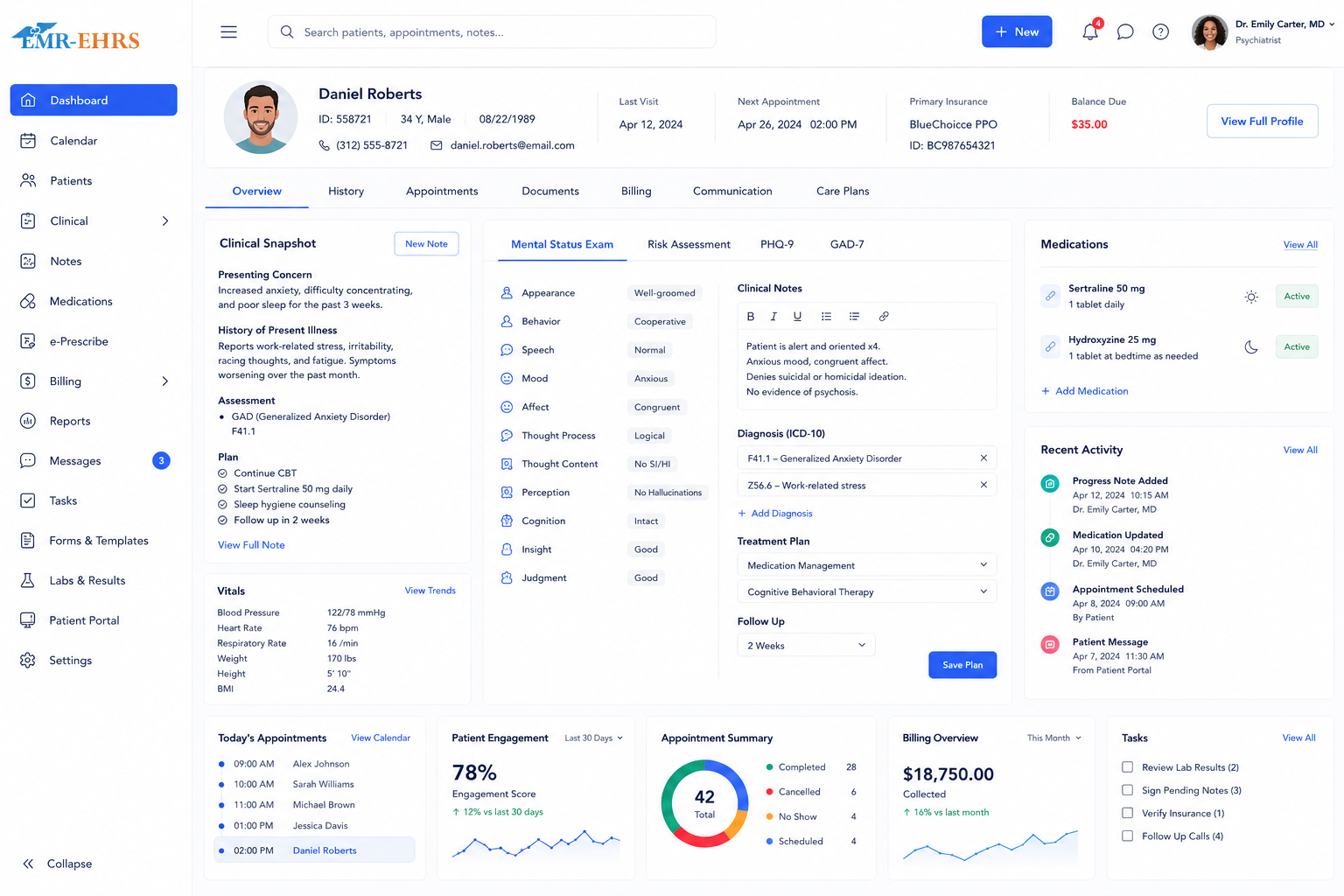
Document presenting concerns, psychiatric history, medical history, family history, social history, substance use history, trauma history if applicable, medication history, allergies, and prior treatment.
4Initial Psychiatric Evaluation
Document chief complaint, history of present illness, psychiatric review, diagnosis documentation, risk review, treatment recommendations, medication plan, therapy referral if applicable, and follow-up plan.
5Mental Status Exam Documentation
Record appearance, behavior, speech, mood, affect, thought process, thought content, perception, cognition, orientation, memory, attention, insight, judgment, impulse control, and safety concerns.
6Diagnosis Documentation
Document diagnosis, supporting clinical findings, related symptoms, functional impact, risk review, treatment considerations, and follow-up plan.
7Treatment Plan Creation
Create diagnosis-linked treatment plans with patient goals, symptom targets, medication plan, therapy plan if applicable, care coordination tasks, review dates, and progress status.
8Psychiatric Medication Management and E-Prescribing
Manage current medications, previous medications, allergies, medication response, side effects, adherence, dose changes, refills, prior authorizations, pharmacy communication, and e-prescribing.
9Progress Notes and Medication Follow-Up Visits
Document interval history, symptom changes, medication response, side effects, functional status, risk review, treatment plan updates, refills, and next appointment.
10Screening Tools, Rating Scales and Measurement-Based Care if Supported
Track depression screening, anxiety screening, ADHD symptoms, mood symptoms, sleep concerns, substance use history, patient-reported outcomes, score trends, and follow-up tasks if supported.
11Risk Assessment and Safety Planning Documentation
Document safety concerns, risk factors, protective factors, suicidal ideation screening where applicable, self-harm risk, substance use risk, safety plan, crisis resources, and follow-up reminders.
12Psychotherapy or Session Documentation if Applicable
Document session type, presenting issue, therapeutic focus, interventions used, patient response, progress toward goals, homework or care instructions if applicable, and follow-up plan.
13Care Coordination, Referrals, Labs and Outside Records
Track lab orders, medication monitoring labs if applicable, abnormal result follow-up, therapy referrals, primary care coordination, specialist referrals, hospitalization or discharge summaries if applicable, outside records, and documents.
14Telepsychiatry and Patient Communication if Supported
Support virtual visit scheduling, telehealth consent if applicable, secure communication, refill requests, follow-up instructions, remote check-in if supported, and documentation tied to visit notes.
15Scheduling, Recurring Visits, Reminders and No-Show Tracking
Manage new psychiatric evaluations, medication follow-ups, recurring visits, therapy sessions if applicable, virtual visits if supported, waitlists, cancellations, no-shows, appointment reminders, refill follow-up reminders, and missing intake alerts.
16Psychiatry Billing and Claims
Connect documentation, CPT codes, ICD-10 codes, modifiers, eligibility, authorizations, claim readiness, electronic claims, denials, ERA/payment posting, patient balances, and A/R tracking.
17Reports, Outcomes and Practice Performance Visibility
Review psychiatric evaluation volume, medication follow-up volume, treatment plan status, refill tasks, unsigned notes, screening trends if tracked, no-shows, authorizations, claims, denials, revenue, and productivity.