Anesthesiology EMR Software

Anesthesiology EMR Software Built for Complete Anesthesia Workflows

EMR-EHRs provides anesthesiology EMR software designed to help anesthesia providers manage pre-anesthesia evaluations, airway assessments, intraoperative charting, vitals documentation, medication records, PACU recovery notes, anesthesia billing, reporting, and secure patient records from one connected system.
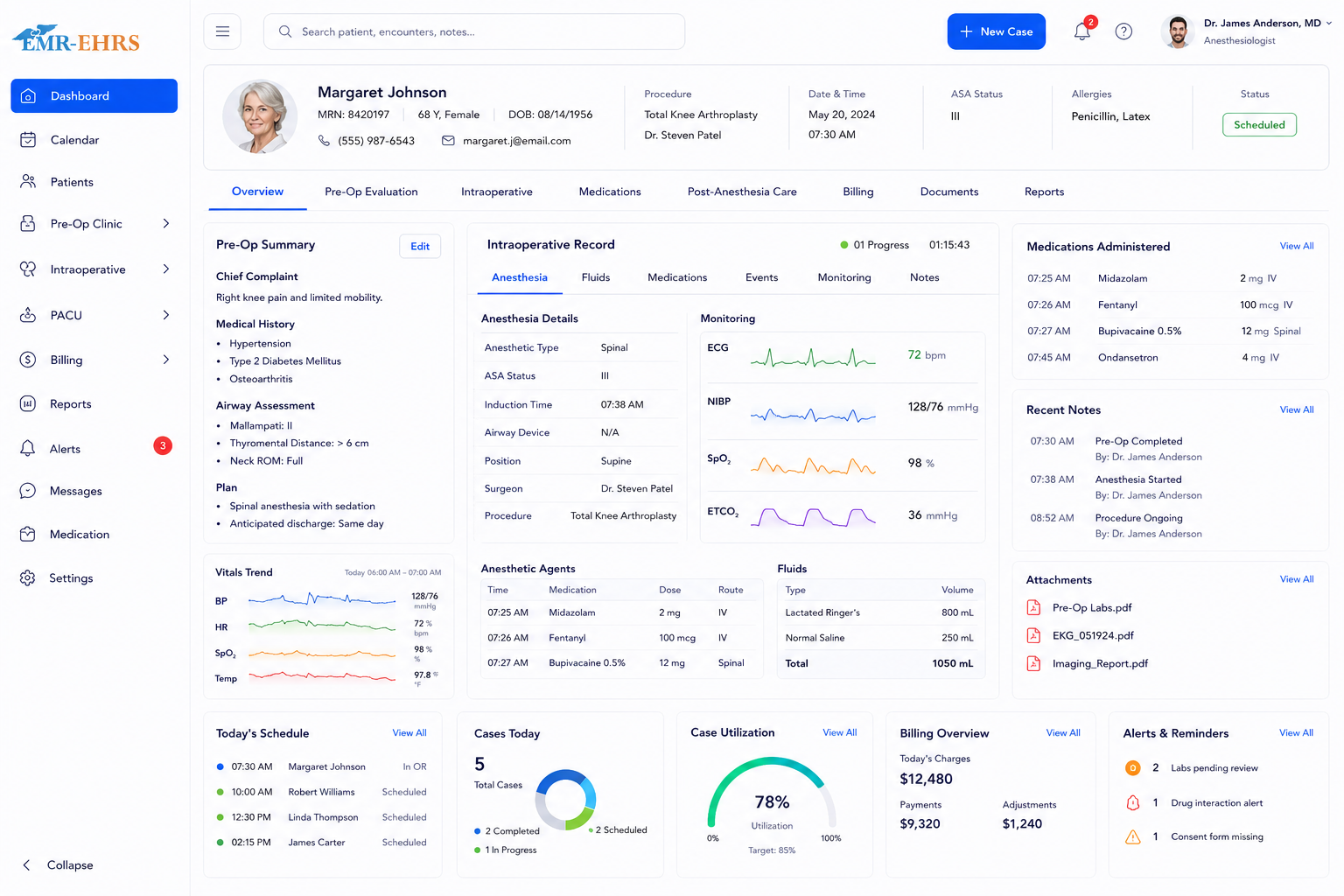
Anesthesiology EMR dashboard preview
Anesthesia workflow-focused EMRPre-op to PACU documentationAnesthesia billing supportRole-based accessCustom anesthesia templatesPatient portal supportPowered by EMR-EHRs
Quick answer

What Is Anesthesiology EMR Software?

Anesthesiology EMR software is a specialty electronic medical record system for anesthesia providers. It helps document pre-anesthesia evaluations, airway assessments, ASA classification, intraoperative anesthesia records, vitals, medications, anesthesia events, PACU recovery notes, post-anesthesia evaluations, billing details, reporting, and secure patient records.

Anesthesiology EMR and AIMS Workflow Support

EMR-EHRs supports anesthesia documentation across the perioperative workflow, from pre-procedure evaluation through recovery and billing readiness.

Anesthesia information management system workflow
Electronic anesthesia record support
Real-time perioperative documentation
Pre-anesthesia evaluation workflow
Intraoperative charting
Vitals and monitoring documentation
Medication administration timeline
Anesthesia case timeline
PACU documentation
Charge capture and billing handoff

Anesthesiology EMR Software for Anesthesia Providers and Procedure-Based Care

Anesthesiology Practices

Support pre-op evaluations, intraoperative documentation, anesthesia billing, reporting, and patient records.

Anesthesia Groups

Manage provider scheduling, case documentation, time tracking, billing workflows, and multi-provider reporting.

Ambulatory Surgery Centers

Support pre-op review, anesthesia charting, recovery documentation, procedure coordination, and billing support.

Hospitals and Surgical Departments

Support perioperative documentation, monitoring data, case records, reporting, and care coordination.

Office-Based Procedure Centers

Manage consent forms, medication tracking, vitals, anesthesia notes, and recovery documentation.

Pain Procedure Centers

Support medication records, procedure notes, sedation documentation, image/document attachment, coding, and follow-up tracking.

Endoscopy and GI Centers

Support sedation notes, vitals tracking, recovery documentation, patient instructions, and billing handoff.

Why Anesthesiology Requires Specialty-Specific EMR Software

EMR-EHRs is positioned as an anesthesia workflow solution, not just a general EMR system.

Anesthesia care is procedure-based, not office-visit-based
Documentation happens before, during, and after the procedure
Generic EMRs often lack anesthesia case timelines
Vitals, medications, fluids, and airway events must be documented accurately
Anesthesia billing depends on case time, CPT, ICD, ASA codes, and modifiers
PACU and post-anesthesia documentation are part of the complete record
Reporting and audit support are important for quality, compliance, and revenue
Anesthesia teams need records that connect clinical, operational, and billing workflows

Manage the Complete Anesthesia Workflow From Pre-Op to Recovery

Step 1: Case Scheduling

  • Procedure date and time
  • Facility / location
  • Surgeon or referring provider
  • Anesthesia provider assignment
  • Case type
  • Procedure type
  • Estimated case duration
  • Patient status
  • Appointment reminders

Step 2: Pre-Anesthesia Evaluation

  • Medical history
  • Surgical history
  • Prior anesthesia history
  • Medication review
  • Allergy review
  • Airway assessment
  • ASA classification
  • Risk factors
  • Lab and imaging review
  • Consent status
  • NPO status
  • Pre-op checklist

Step 3: Patient Check-In and Pre-Procedure Review

  • Demographic verification
  • Insurance verification
  • Consent confirmation
  • Medication reconciliation
  • Allergy confirmation
  • Pre-procedure vitals
  • NPO confirmation
  • Documentation completion status

Step 4: Intraoperative Anesthesia Charting

  • Anesthesia start time
  • Anesthesia stop time
  • Procedure start / stop time
  • Anesthesia type
  • Airway management
  • Vitals documentation
  • Medication administration
  • Fluids and intake/output
  • Anesthesia events
  • Provider notes
  • Monitoring data
  • Signature completion

Step 5: Medication and Event Tracking

  • Medication name
  • Dose
  • Route
  • Time administered
  • Infusion tracking
  • Anesthetic agents
  • Reversal agents
  • Fluids
  • Adverse event notes
  • Provider attestation

Step 6: PACU and Recovery Documentation

  • Post-anesthesia evaluation
  • Recovery vitals
  • Pain score
  • Airway status
  • Nausea/vomiting notes
  • Recovery nursing notes
  • Discharge readiness
  • Post-procedure instructions
  • Follow-up recommendations

Step 7: Billing and Claim Readiness

  • Anesthesia time tracking
  • CPT coding support
  • ICD coding support
  • ASA code support
  • Modifier support
  • Superbill creation
  • Claim validation
  • Payment posting
  • Denial tracking
  • Billing reports

Step 8: Reporting and Quality Review

  • Case volume reports
  • Provider productivity
  • Chart completion reports
  • Quality indicators
  • Medication documentation reports
  • Denial reports
  • Revenue reports
  • Operational dashboards

Pre-Anesthesia Evaluation and Risk Review

Patient medical history
Surgical history
Prior anesthesia history
Medication and allergy review
Airway assessment
ASA classification
Risk factor documentation
Co-morbidity documentation
Lab and imaging review
Pre-op vitals
Consent status
NPO status
Clearance documentation

Airway Assessment and ASA Classification Support

Airway assessment documentation
ASA classification support
Prior anesthesia complications
Co-morbidity documentation
Risk factor documentation
Allergy and medication review
Pre-procedure readiness status
Provider notes and signatures

Intraoperative Anesthesia Charting and Case Timeline

Anesthesia start / stop time
Procedure start / stop time
Anesthesia type
Airway notes
Vitals tracking
Medication administration
Fluids and intake/output
Clinical event timeline
Provider notes
Monitoring data documentation
Signature and attestation
Chart completion status

Vitals Tracking and Monitoring Data for Anesthesia Care

Document vitals manually or through supported connected workflows, organize monitoring data inside the anesthesia record, and support consistent anesthesia chart review.

Blood pressure
Oxygen saturation
Temperature
Respiration
End-tidal CO2
Heart rhythm / ECG
Pulse rate
Pain score
Manual vitals entry
Monitoring data capture where supported
Timeline-based vitals review

Medication Administration and Anesthesia Record Management

Medication administration log
Medication name
Dose
Route
Time administered
Infusion documentation
Anesthetic agents
Reversal agents
Fluids
Allergy and interaction alerts
Adverse event notes
Controlled substance documentation support
Provider attestation

PACU, Recovery, and Post-Anesthesia Documentation

Post-anesthesia evaluation
Recovery vitals
Pain score tracking
Nausea/vomiting notes
Airway status
Recovery nursing notes
Discharge readiness
Patient instructions
Follow-up reminders
Secure patient communication
Recovery outcome documentation

Anesthesia Practice Management Software for Daily Operations

Patient registration
Case scheduling
Provider schedules
Facility location tracking
Insurance eligibility
Prior authorization tracking
Document management
Patient communication
Staff task management
Payment tracking
Reporting

Anesthesia Billing and Coding Software for Cleaner Claims

Anesthesia time tracking
CPT coding support
ICD coding support
ASA code support
Modifier support
Superbill creation
Charge capture
Eligibility verification
Prior authorization tracking
Claim validation
Claim submission support
Payment posting
Denial management
Documentation-to-claim workflow
Billing reports

Patient Portal for Forms, Instructions, and Follow-Up

A patient portal helps anesthesia practices collect forms, update patient information, review medications and allergies, share pre-procedure instructions, send post-procedure guidance, support secure messaging, and reduce manual front-desk work.

Online intake forms
Demographic updates
Insurance updates
Medical history forms
Medication history forms
Pre-procedure instructions
Consent-related forms
Secure messaging
Post-procedure instructions
Follow-up reminders
Online payments

Surgical Team and Facility Coordination

Surgeon note access
Facility location tracking
Procedure details
Case schedule visibility
Lab and imaging review
Medication and allergy information
Surgical team communication
ASC, hospital, and procedure center documentation
Referring provider coordination

Monitoring Data and Device-Ready Documentation

Use device-ready documentation where supported, supported connected workflows, and monitoring data documentation where available.

Manual vitals entry
Supported connected monitoring workflows
Timeline-based clinical events
Anesthesia record review
Vitals documentation history
Case event organization
Consistent perioperative documentation

Anesthesia Reporting, Chart Audits, and Quality Dashboards

Case volume reports
Provider productivity reports
Anesthesia time reports
Medication documentation reports
Chart completion reports
Quality indicators
Audit support
Denial reports
Revenue reports
Facility reports
Operational dashboards

AI-Powered Features That Help Anesthesia Teams Work Faster

AI-powered features are designed to support workflow efficiency and documentation review. Final clinical decisions and final documentation remain under provider control.

AI-assisted documentation suggestions
Smart patient history summaries
Missing documentation alerts
Medication documentation prompts
Coding-support prompts
Case preparation prompts
Follow-up reminder suggestions
Chart review support
Staff task prioritization

Generic EMR vs Anesthesiology-Specific EMR Software

AreaGeneric EMRAnesthesiology-Specific EMR
Main workflowOffice visitsPre-op to recovery anesthesia care
DocumentationGeneral notesPre-anesthesia, intra-op, PACU, post-anesthesia
MonitoringLimitedVitals, ECG, oxygen saturation, end-tidal CO2
Medication trackingBasic medication listDose, route, time, agents, infusions, events
BillingStandard claimsAnesthesia time, ASA codes, CPT, ICD, modifiers
CoordinationBasic referralsSurgical team, facility, lab, imaging, and procedure data
ReportingGeneral reportsCase, provider, quality, audit, denial, and revenue reports
Case timelineLimitedAnesthesia start/stop, procedure events, medication timeline

What to Look for in Anesthesiology EMR Software

Pre-anesthesia evaluation templates
Airway assessment documentation
ASA classification support
Prior anesthesia history documentation
Intraoperative anesthesia charting
Anesthesia start and stop time tracking
Procedure time tracking
Vitals documentation
Monitoring data documentation where supported
Medication administration documentation
Fluids and infusion documentation
PACU and recovery documentation
Post-anesthesia evaluation
CPT, ICD, ASA code, and modifier support
Anesthesia billing workflow
Eligibility and authorization tracking
Surgical team and facility coordination
Patient portal tools
Chart audit support
Quality reporting dashboards
Role-based access and audit trails
Data conversion support
Staff training and implementation support

Anesthesiology EMR Implementation, Training, and Support

1

Workflow Review

Review current anesthesia documentation, scheduling, billing, and reporting workflows.

2

Template Setup

Set up pre-anesthesia, intra-op, PACU, post-anesthesia, and billing templates.

3

Scheduling Configuration

Configure providers, facilities, procedure types, case types, and appointment statuses.

4

Billing Workflow Setup

Configure eligibility, authorization, time tracking, coding, claims, and reporting workflows.

5

Data Conversion Planning

Plan migration of patient records, charts, documents, and billing data.

6

Staff Training

Train anesthesia providers, front desk, billing staff, clinical staff, and administrators.

7

Go-Live Support

Support the practice during launch and early adoption.

8

Ongoing Optimization

Improve templates, reports, workflow settings, and staff usage after launch.

Why Choose EMR-EHRs for Anesthesiology EMR Software?

Talk to an EMR-EHRs specialist to see how our anesthesiology EMR software can support your anesthesia workflow.

Anesthesia workflow-focused EMR structure
Pre-op, intra-op, PACU, and post-anesthesia documentation support
Scheduling, billing, and reporting integration
Custom anesthesia templates and forms
Patient portal support
Eligibility and authorization workflow support
Implementation and training assistance
Support for anesthesia practices, ASCs, hospitals, and procedure centers
Healthcare software experience
Real support contact information

HIPAA-Compliant, Secure, and Built for Healthcare Trust

Anesthesiology EMR Software FAQs

Anesthesiology EMR software is a specialty electronic medical record system designed for anesthesia providers. It helps document pre-anesthesia evaluations, airway assessments, ASA classification, intraoperative anesthesia records, vitals, medications, anesthesia events, PACU recovery notes, post-anesthesia evaluations, billing details, reporting, and secure patient records.
Anesthesiology EMR software is built around the anesthesia care journey, while regular EMR software is usually built around office visits. Anesthesia EMR software should support pre-op evaluation, airway assessment, ASA classification, intraoperative charting, vitals tracking, medication administration, anesthesia time tracking, PACU documentation, coding, billing, and quality reporting.
Anesthesia practices should look for EMR software with pre-anesthesia evaluation templates, airway assessment, ASA classification support, intraoperative charting, vitals tracking, medication documentation, PACU documentation, anesthesia time tracking, CPT/ICD/ASA/modifier support, billing workflows, reporting dashboards, audit trails, role-based access, and secure patient records.
Yes. Strong anesthesiology EMR software should support documentation for blood pressure, oxygen saturation, temperature, respiration, heart rhythm or ECG, end-tidal CO2, pulse rate, pain scores, anesthesia events, medication name, dose, route, time administered, fluids, infusions, anesthetic agents, and recovery vitals.
Yes. Anesthesiology EMR software can help connect anesthesia documentation with billing workflows by supporting anesthesia start and stop time tracking, procedure time tracking, CPT codes, ICD codes, ASA codes, modifiers, superbills, eligibility verification, prior authorization tracking, claim validation, payment posting, denial tracking, and billing reports.

Ready to Improve Your Anesthesia Workflow With EMR-EHRs?

See how EMR-EHRs can help your anesthesia practice manage pre-anesthesia evaluations, airway assessments, intraoperative documentation, vitals, medication records, PACU documentation, billing, reporting, patient communication, and secure records from one connected system.

Email:jason@1stproviderschoice.com