Complex Musculoskeletal Exam Documentation
Providers need structured documentation for ROM, strength, swelling, tenderness, stability tests, special orthopedic tests, gait, neurovascular findings, pain response, and functional limitations.
EMR-EHRs Orthopedic Sports Medicine EHR Software helps practices manage injury evaluations, musculoskeletal exams, imaging, procedures, rehab tracking, return-to-play workflows, billing, scheduling, and reporting in one connected system.
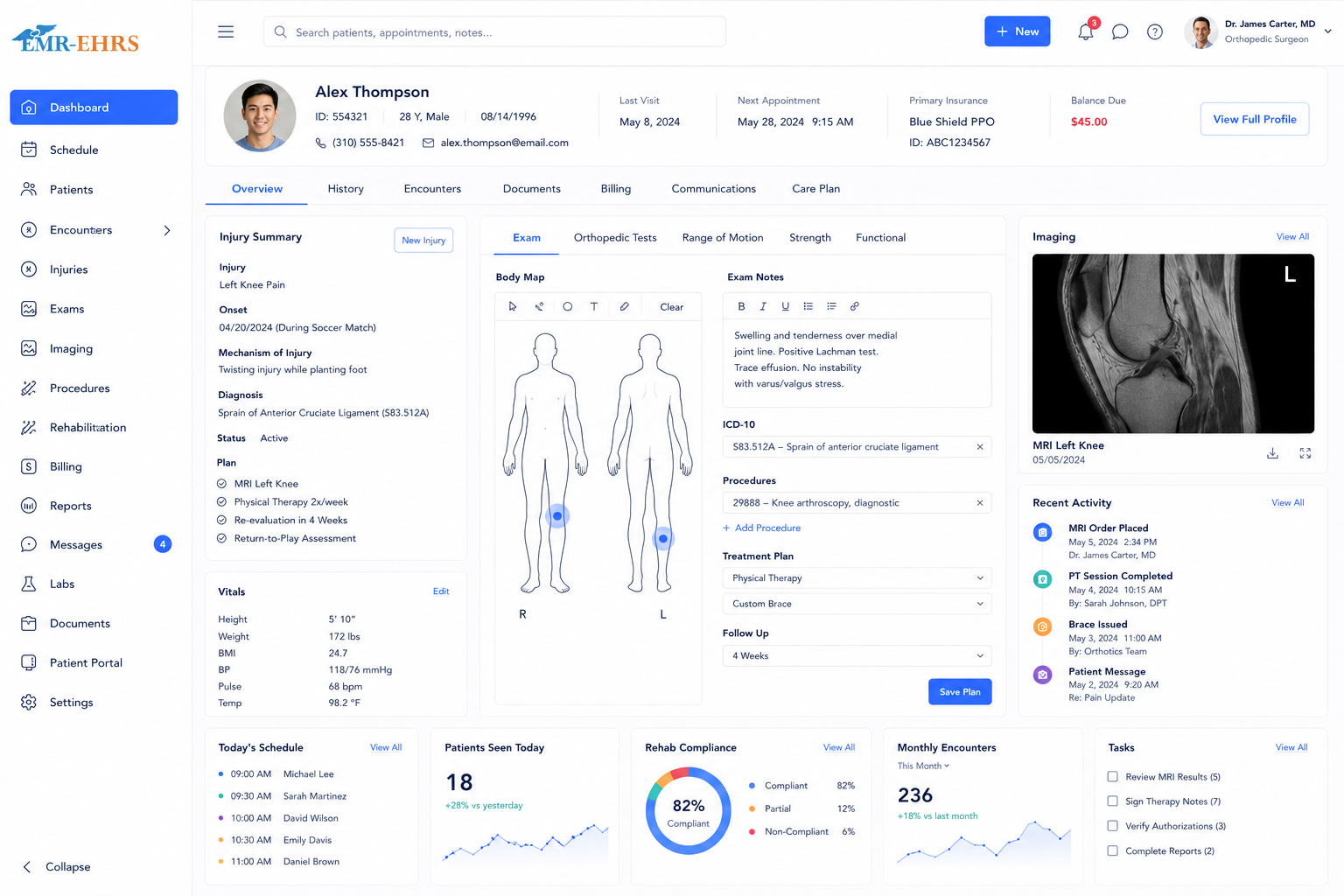
Orthopedic sports medicine EHR software is a specialty electronic health record system that helps orthopedic and sports medicine practices manage injury evaluations, musculoskeletal exams, body-part charting, laterality documentation, imaging reports, procedure notes, injections, fracture care, rehab tracking, return-to-play decisions, prior authorizations, billing, scheduling, patient portal access, and reporting.
EMR-EHRs orthopedic sports medicine EHR software supports the full sports injury and musculoskeletal care workflow: patient intake, injury history, body-part selection, laterality documentation, MSK exam, imaging review, diagnosis, treatment plan, procedure documentation, therapy referral, rehab tracking, return-to-play planning, billing, reporting, and patient engagement.
Orthopedic sports medicine practices manage acute injuries, chronic musculoskeletal conditions, sports-related trauma, diagnostic imaging, injections, procedures, fracture care, surgical referrals, therapy referrals, rehabilitation progress, return-to-play decisions, prior authorizations, billing, and long-term outcomes. A generic EHR often does not provide enough structure for body-part exams, laterality, orthopedic templates, imaging workflows, sports injury documentation, rehab tracking, and orthopedic billing.
Providers need structured documentation for ROM, strength, swelling, tenderness, stability tests, special orthopedic tests, gait, neurovascular findings, pain response, and functional limitations.
Orthopedic teams need accurate body-part selection and right, left, or bilateral laterality documentation for exams, imaging, procedures, billing, and follow-up care.
X-rays, MRI reports, CT reports, ultrasound reports, outside records, operative notes, and therapy notes can become difficult to manage when they are not connected to the patient chart.
Joint injections, aspirations, fracture care, casting, splinting, bracing, DME, and post-procedure instructions need structured documentation.
Sports medicine providers need to track therapy referrals, rehab progress, restrictions, functional improvement, return-to-play readiness, and return-to-work status.
Imaging, injections, procedures, surgery referrals, therapy referrals, medications, and DME/bracing may require payer approval and supporting documentation.
Orthopedic sports medicine billing may involve E/M visits, procedures, injections, fracture care, DME, laterality, CPT codes, ICD-10 codes, modifiers, authorizations, claim readiness, denials, and unpaid claims.
Patients need injury instructions, medication guidance, procedure aftercare, home exercise instructions, activity restrictions, return-to-play guidance, appointment reminders, and portal messages.
Practices need reports for injury visits, body-part trends, imaging orders, procedures, injections, therapy referrals, authorizations, claims, denials, revenue, no-shows, and outcomes.
Capture demographics, insurance, referral source, chief complaint, injury date, mechanism of injury, sport/activity, prior injuries, prior treatment, medications, allergies, surgical history, and outside records.
Document affected body part, right/left/bilateral laterality, pain location, onset, severity, functional limitations, activity restrictions, work restrictions, and patient goals.
Record acute injury details, chronic injury history, sport/activity involved, swelling, bruising, instability, locking/catching if applicable, prior imaging, previous treatment, and current limitations.
Document inspection, palpation, ROM, strength, tenderness, effusion, stability testing, special orthopedic tests, gait, functional movement, neurovascular status, and comparison with the opposite side.
Manage X-ray orders, MRI reports, CT reports, ultrasound reports, outside imaging, radiology reports, provider interpretation, abnormal findings, imaging comparison, and follow-up tasks.
Document diagnosis, injury severity, conservative treatment, medications, bracing, injections, fracture care, procedure needs, therapy referral, activity restrictions, and follow-up plan.
Document procedure type, body part, laterality, consent, medication/device details where applicable, technique, patient tolerance, complication screening, aftercare instructions, and follow-up plan.
Manage medication history, allergies, e-prescribing, refills, pain medication documentation, anti-inflammatory medication documentation, post-procedure instructions, and pharmacy communication.
Track PT referrals, OT referrals if applicable, rehab protocol, therapy note uploads, functional progress, home exercise program, restrictions, and communication with therapy providers.
Document recovery milestones, ROM progress, strength progress, pain trends, functional readiness, sport restrictions, activity progression, re-injury risk notes, clearance status, and patient education.
Track work duties, modified duty, work restrictions, activity limits, employer forms if applicable, follow-up timeline, and return-to-work clearance.
Track surgical referral, pre-op records, operative reports, surgery date, post-op visits, wound/incision status, ROM progress, pain control, restrictions, rehab milestones, and recovery plan.
Track imaging approvals, injection authorizations, procedure authorizations, surgery authorizations, therapy authorizations, DME/bracing approvals, expiration alerts, missing documentation, and staff worklists.
Connect documentation, ICD-10 codes, CPT codes, modifiers, laterality, procedures, authorizations, claim readiness, electronic claims, denials, payments, patient balances, and unpaid claims.
Review clinical, operational, and financial reports for injury visits, body-part trends, imaging, procedures, rehab tracking, return-to-play status, authorizations, billing, provider productivity, and outcomes.
EMR-EHRs helps orthopedic sports medicine teams organize imaging reports, outside records, provider review tasks, and follow-up plans so clinical decisions stay connected to the patient chart. Specific imaging systems, PACS, DICOM support, devices, or partners should only be listed when verified.
EMR-EHRs helps providers track injury recovery from the first visit through rehabilitation, activity progression, return-to-sport planning, return-to-work planning, and final clearance.
EMR-EHRs helps orthopedic sports medicine providers document procedures, injections, fracture care, casting, splinting, bracing, DME, laterality, aftercare instructions, and follow-up tasks in a structured workflow.
EMR-EHRs helps sports medicine teams coordinate therapy referrals, rehab protocols, functional progress, restrictions, and return-to-activity goals from the patient chart.
EMR-EHRs helps orthopedic sports medicine practices track authorizations for imaging, injections, procedures, surgery, therapy, medications, and DME/bracing so clinical, scheduling, and billing teams can stay aligned.
EMR-EHRs helps orthopedic sports medicine providers manage medication history, allergies, e-prescribing, refills, post-procedure medication instructions, post-op instructions, and patient medication education.
EMR-EHRs connects clinical, administrative, and financial workflows so orthopedic sports medicine practices can manage injury care, imaging, procedures, therapy referrals, medication workflows, billing, reporting, and patient engagement without relying on disconnected systems.
Only specific imaging systems, devices, labs, clearinghouses, therapy platforms, or integration partners should be listed when verified. This page uses careful workflow wording for connected documentation and exchange needs.
HIPAA-focused workflows, audit-friendly records, secure patient record management, and design that supports secure orthopedic documentation.
AI-powered tools should support documentation and administrative efficiency while keeping orthopedic sports medicine providers responsible for final review, diagnosis, treatment decisions, procedure decisions, return-to-play decisions, and signed records.
Draft support for injury history, body-part documentation, and sports medicine follow-up notes.
Support for organizing ROM, strength, tenderness, special tests, gait, and neurovascular findings.
Help summarize imaging report context and pending review tasks.
Surface rehab progress, restrictions, and return-to-activity details across visits.
Prompt teams to review laterality, procedures, modifiers, authorizations, and open documentation tasks.
Suggest follow-up tasks for return-to-play, return-to-work, and recovery milestone review.
Manage injury evaluations, MSK exams, imaging, procedures, therapy referrals, billing, scheduling, and reporting.
Document joint pain, fractures, sports injuries, procedures, injections, imaging, treatment plans, and follow-up care.
Track injury history, sport/activity, rehab progress, restrictions, return-to-play status, return-to-work status, and patient education.
Manage body-part charting, pain documentation, functional limitations, imaging review, procedures, medications, and outcomes.
Coordinate therapy referrals, rehab progress, home exercise plans, activity restrictions, work restrictions, and return-to-activity goals.
Document injections, aspirations, bracing, casting, splinting, fracture care, procedure notes, and aftercare instructions.
Track work duties, modified duty, restrictions, activity limits, employer forms if applicable, and return-to-work clearance.
Centralize records, provider schedules, documentation, imaging workflow, billing, authorizations, and reports.
Manage scheduling, records, imaging workflows, patient communication, billing, authorizations, and reporting across locations.
| Workflow Area | Generic EHR | Orthopedic Sports Medicine EHR |
|---|---|---|
| Injury visits | General visit notes | Injury history, mechanism, sport/activity, body part, laterality, pain, and functional limitation |
| MSK exams | Basic physical exam | ROM, strength, swelling, tenderness, stability tests, special tests, gait, and neurovascular findings |
| Body-part tracking | Manual notes | Structured body-part and laterality documentation for exams, imaging, procedures, and billing |
| Imaging | Attachments or outside records | X-ray, MRI, CT, ultrasound reports, provider review tasks, comparison, and follow-up |
| Procedures | General procedure notes | Injections, aspirations, fracture care, casting, splinting, bracing, DME, and aftercare |
| Rehab tracking | Manual follow-up | Therapy referrals, rehab status, functional progress, restrictions, return-to-play, and return-to-work |
| Billing | General claims | Laterality, modifiers, procedures, fracture care, DME, authorizations, and claim readiness |
| Patient engagement | General portal | Injury forms, home exercise instructions, procedure aftercare, activity restrictions, and return-to-play guidance |
| Reporting | Basic reports | Injury trends, body-part visits, procedures, imaging, authorizations, claims, revenue, and outcomes |
EMR-EHRs supports injury documentation, body-part charting, MSK exams, imaging workflows, procedures, rehab tracking, medication workflows, billing, and reporting.
EMR-EHRs helps connect clinical, administrative, and billing workflows so orthopedic sports medicine teams can reduce duplicate work and improve visibility.
Track injury history, imaging results, treatment plans, procedures, therapy referrals, restrictions, return-to-play status, and return-to-work progress from one workflow.
EMR-EHRs helps teams monitor authorizations, claim readiness, unpaid claims, denials, laterality, modifiers, and billing reports.
Support intake forms, appointment reminders, prescription refills, imaging access if available, procedure instructions, home exercises, activity restrictions, and portal messages.
EMR-EHRs helps orthopedic sports medicine practices configure templates, schedules, users, billing workflows, authorization workflows, reports, and staff workflows. Phone: (480) 782-1116. Email: jason@1stproviderschoice.com.
Review orthopedic sports medicine documentation needs, injury workflows, MSK exams, imaging workflows, procedures, medication workflows, therapy referrals, scheduling, billing, authorizations, and reporting goals.
Set up users, roles, templates, schedules, imaging workflows, billing settings, authorization workflows, medication workflows, reports, and patient portal workflows.
Configure injury templates, MSK exam templates, body-part charting, imaging workflows, procedure templates, rehab tracking, return-to-play workflows, authorization workflows, and billing workflows.
Train orthopedic sports medicine providers, clinical staff, front desk staff, billing teams, and administrators.
Support your team during launch.
Improve templates, workflows, billing processes, authorization tracking, reports, patient engagement, and team adoption after launch.













Simplify injury documentation, musculoskeletal exams, body-part charting, imaging workflows, procedure notes, injection documentation, fracture care, rehab tracking, return-to-play planning, medication management, billing, scheduling, patient portal access, and reporting with orthopedic sports medicine EHR software from EMR-EHRs.
Phone:(480) 782-1116 Email:jason@1stproviderschoice.com