1Patient Intake and ENT History
Capture demographics, insurance, referral source, chief complaint, ENT history, hearing history, allergy history, sinus history, sleep/snoring concerns, voice symptoms, medications, allergies, prior surgeries, and outside records.
2Symptom and Condition-Specific Intake
Document ear pain, hearing loss, tinnitus, dizziness, vertigo, ear drainage, sinus congestion, nasal obstruction, post-nasal drip, sore throat, hoarseness, swallowing issues, allergies, snoring, sleep concerns, neck mass, or recurrent infections.
3ENT Exam Documentation
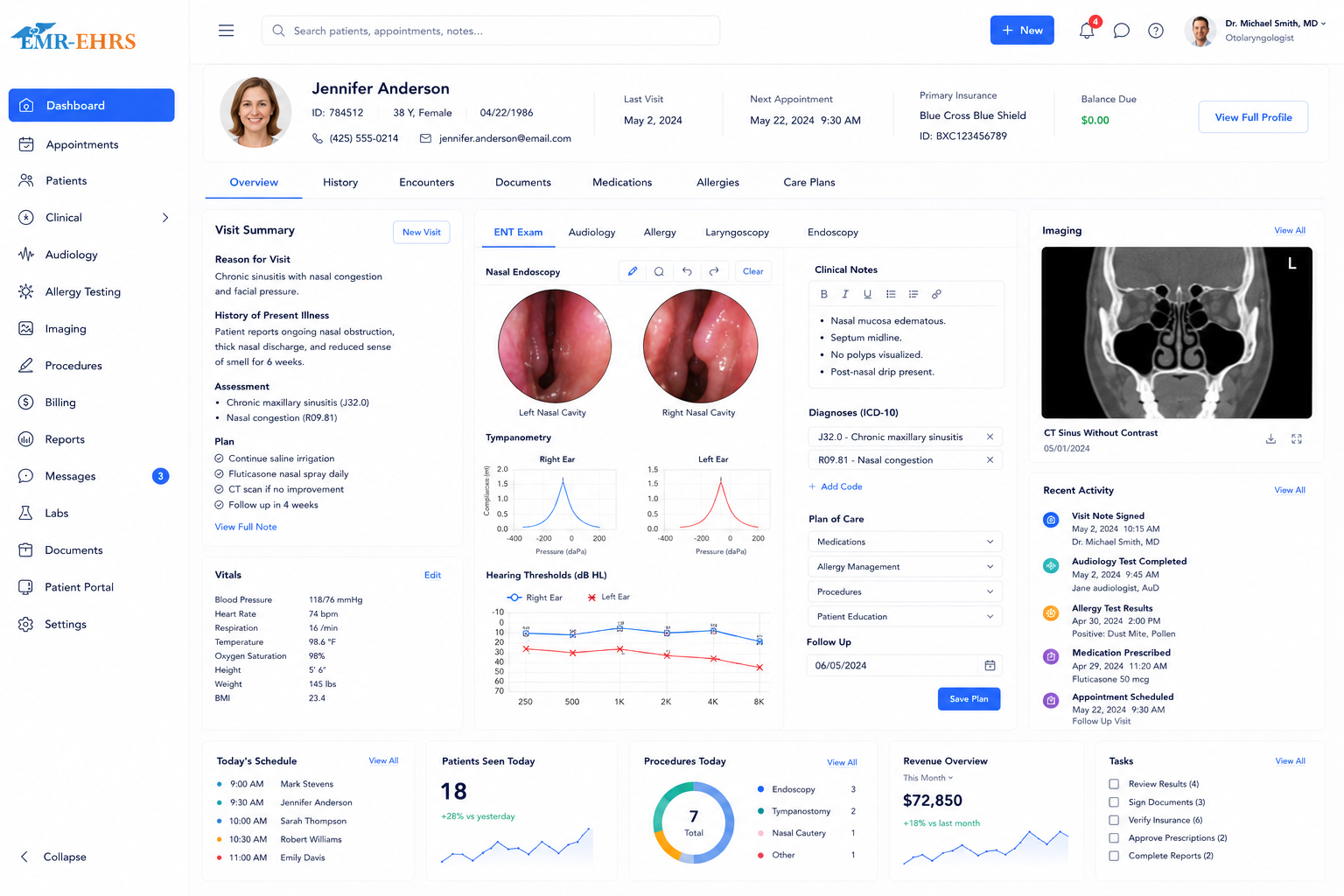
Record otoscopy, external ear findings, ear canal findings, tympanic membrane findings, nasal exam, septum, turbinates, oral cavity, pharynx, tonsils, larynx, neck exam, lymph nodes, cranial nerves, and relevant physical findings.
4Audiology, Hearing Test and Tympanometry Review
Manage audiograms, hearing thresholds, right/left ear documentation, hearing loss type, tympanometry results, hearing screening results, speech testing notes if applicable, ABR reports if applicable, and provider interpretation.
5Nasal Endoscopy, Laryngoscopy and Diagnostic Procedure Documentation
Document nasal endoscopy, flexible laryngoscopy, sinus findings, vocal cord findings, nasopharynx findings, procedure indication, consent, findings, image/video attachment if supported, patient tolerance, and aftercare instructions.
6Imaging, Lab, Pathology and Outside Record Review
Organize CT sinus reports, imaging reports, lab results, pathology reports, outside ENT records, prior operative reports, audiology documents, allergy records, and referral notes.
7Diagnosis and Treatment Plan
Document diagnosis, assessment, medication plan, allergy plan, procedure recommendation, surgery planning, patient education, follow-up timeline, and referral needs.
8Allergy Testing and Immunotherapy Management
Track allergy history, triggers, test orders, test results, vial details if supported, immunotherapy plan, shot schedule, dose tracking, reaction notes, missed shots, follow-up reminders, and patient education.
9ENT Medication Management and E-Prescribing
Manage medication history, allergies, e-prescribing, refills, antibiotics, nasal sprays, allergy medications, steroids if applicable, ear drops, post-procedure medications, medication prior authorizations, and pharmacy communication.
10ENT Procedure Documentation
Document cerumen removal, nasal cautery, biopsy, sinus procedure notes, ear procedures, throat procedures, site/laterality if applicable, consent, technique, findings, patient tolerance, complication screening, and aftercare instructions.
11Surgery Coordination and Post-Op Follow-Up
Track surgical referral, pre-op checklist, procedure date, operative report, post-op visit, healing status, medication instructions, restrictions, complication screening, patient education, and follow-up care.
12Prior Authorization and Referral Tracking
Track imaging approvals, procedure authorizations, surgery authorizations, allergy testing authorizations, immunotherapy authorizations if applicable, medication authorizations, audiology referrals, speech/voice therapy referrals, expiration dates, and missing documentation.
13Billing and Claims
Connect documentation, ICD-10 codes, CPT codes, modifiers, procedures, endoscopy, laryngoscopy, allergy services, authorizations, claim readiness, electronic claims, denials, payments, patient balances, and unpaid claims.
14Patient Portal and Patient Communication
Support ENT forms, hearing history forms, allergy history forms, sinus symptom forms, sleep/snoring questionnaires if applicable, test result access, appointment reminders, secure messages, prescription refills, procedure instructions, and post-op instructions.
15Reporting and Practice Performance Visibility
Review clinical, operational, and financial reports for ENT visits, audiology, allergy testing, immunotherapy, procedures, surgeries, authorizations, billing, patient engagement, and outcomes.